
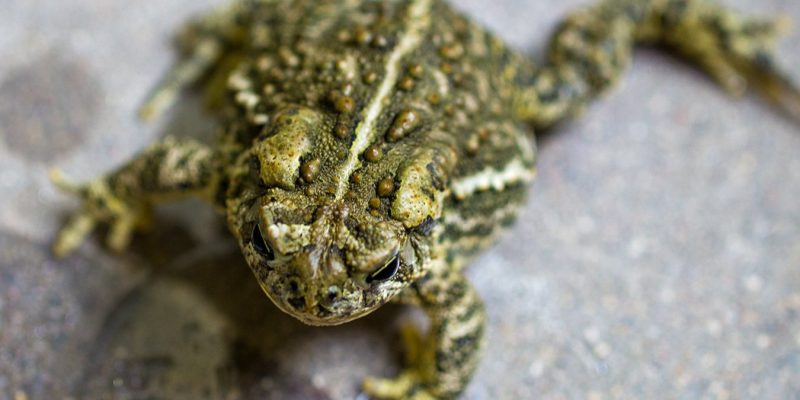
This summer Como Park Zoo & Conservatory in Saint Paul shipped nearly 3,000 Wyoming toad tadpoles to Laramie, Wyoming, by FedEx, packed in oxygenated containers. They came out of a biosecure room underneath the Visitor Center that no member of the public has ever walked through, and they belong to a species that no longer exists in the wild.
A species that no longer exists in the wild
The Wyoming toad is native only to the Laramie Basin. Its population collapsed in the late twentieth century, and by the 1980s intensive searching turned up only a handful of animals. It is now classified as extinct in the wild.
That phrase does a lot of work. Every Wyoming toad alive today exists because of managed conservation breeding programs run by the U.S. Fish & Wildlife Service and accredited zoos. There is no wild population producing more of them. The species is also an AZA SAFE species, one of the animals the Association of Zoos and Aquariums has singled out to concentrate its members’ expertise and money on.
What the room under the Visitor Center does
Como is one of a small number of institutions in the recovery program. Behind biosecurity measures in a specialized containment room beneath the Visitor Center, animal care staff keep adult breeding toads in conditions built to mimic the Laramie Basin: temperature, humidity and seasonal cycling all managed to trigger successful breeding and produce healthy offspring.
This year’s breeding season produced nearly 3,000 tadpoles, which were packed and flown to Wyoming for release into protected habitat.
Como is not the only zoo running an amphibian recovery program out of a back room. Santa Barbara Zoo raised the tadpoles behind a California red-legged frog release in the Santa Monica Mountains, and the Oregon Zoo does the same for northwestern pond turtles.
The keeper goes too
Shipping the tadpoles is not where Como’s involvement stops. Zookeeper Allison Pizel traveled to Laramie in August to help with field surveys alongside the conservation partners monitoring Wyoming toad populations and evaluating how the releases are actually going.
The annual gathering is also where the participating institutions compare notes on research, husbandry technique, what worked this season and what did not. That exchange is the quiet engine behind a recovery program: a dozen zoos each running a version of the same experiment and telling each other the results.
Will guests get to see the toads?
Not yet, but Como wants that to change. The zoo hopes to relocate the Wyoming toad program to the Aquatics Building, where visitors could see the work and learn the story firsthand. That would be a genuinely good addition: a small brown amphibian in a tank does not look like much until you know that every one of its species on Earth came out of a room like the one it is sitting in.
In the meantime, the animals most visitors come to Como for are where you would expect them, out at the front of the house. The most consequential ones are in the basement.