
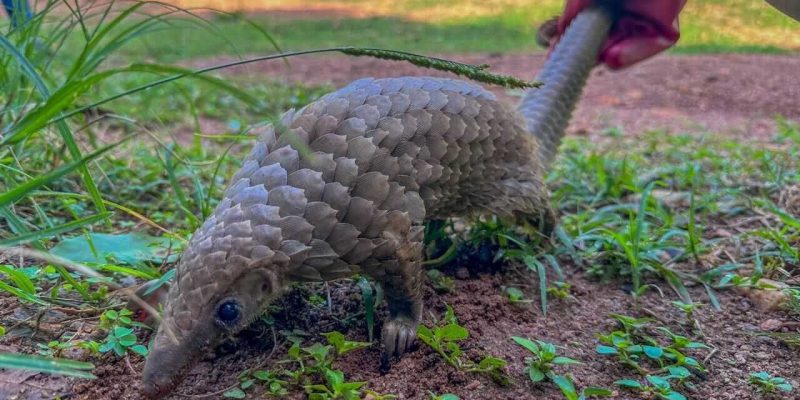
On May 31, 2024, a pangolin the Pangolin Conservation Guild Nigeria had named Ajoke was carried into a protected forest, set down on the ground and let go. The group’s account of the day runs to four sentences. One of them is the reason we are writing about it.
The release happened, the guild wrote, “through collaborations of Pangolin Conservation Guild Nigeria, One Health Development Initiative, and Chicago Zoological Society.”
Why does one name in one sentence matter?
Because this beat keeps running into the opposite answer. When we traced the money behind the collapse of Nigeria’s vulture populations, we could not find an accredited zoo or aquarium anywhere in the funding chain, and we said so. The same search has come up empty for a string of African organizations doing serious work.
Here it did not. The Chicago Zoological Society, which operates Brookfield Zoo Chicago, is an accredited institution in Illinois, and a Nigerian rescue group put it in the credit line for a wild pangolin going back into a forest.
What we can verify is what the guild published. Brookfield’s own pangolin pages describe a broad program and do not name Nigeria or this group specifically, so the link runs one way: the Nigerian side names the zoo, and the zoo does not name the Nigerian side. That is thinner than we would like, and it is still a great deal more than nothing.
What does Brookfield Zoo Chicago actually do with pangolins?
More than any other zoo in the country, on the evidence it publishes. White-bellied pangolins have lived at Brookfield since 2016, in the Habitat Africa! The Forest building and in spaces behind the scenes, and the zoo says it remains the only place in the United States where a visitor can see a pangolin on habitat rather than in a photograph.
Alongside four other accredited institutions, Brookfield co-founded the North American Pangolin Consortium, which funds an annual research grant. The subjects it names are pangolin behavior and ecology, nutritional requirements and health, and reproductive physiology, and it notes that much of the research it pays for happens in Africa, where the animals are under the most pressure. Work on how to keep a pangolin alive in human care and work on how to keep one alive in a forest turn out to be closely related problems.
The zoo’s own framing of the stakes: more than 100,000 pangolins are illegally poached and traded every year, and more than two million have been taken from the wild over the past decade, across all eight species.
What happened to Ajoke?
We do not know, and we are not going to pretend otherwise. The guild’s post does not name the species, the forest, or how the animal came into its hands. It has published nothing about her since, and its newsroom carries no item later than February 2025. A released wild pangolin disappears into the undergrowth and that is the intended outcome, but it means the story ends at the tree line.
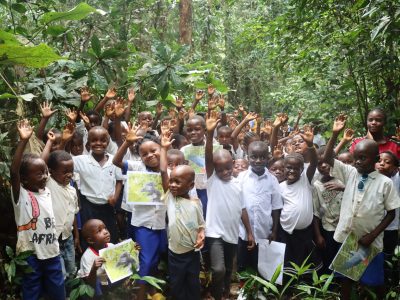
What the guild’s other posts do show is a working rescue pipeline rather than a one-off: pangolins recovered from wildlife markets, a four day community training in Epe that brought together traditional and religious leaders, hunters, bushmeat sellers, customs officers and the Federal Ministry of Environment, and a young man in Cross River State who talked a pangolin out of a cooking pot and then picked up the phone.
How threatened are they?
The white-bellied pangolin, Phataginus tricuspis, the species Brookfield keeps and the one most commonly encountered in the Nigerian trade, is Endangered on the IUCN Red List with a decreasing population. Because the guild did not identify Ajoke’s species, we cannot say she was one.
Pangolins are difficult animals to help. They are nocturnal, solitary, and eat almost nothing but ants and termites, which is why so few institutions have ever held one and why the husbandry research is worth funding at all. Their defense, rolling into an armored ball of keratin scales, works beautifully against a leopard and is precisely what makes them easy for a person to pick up.
So does the chain hold?
Partly, and partly is a real finding. The Association of Zoos and Aquariums reports that 235 accredited and certified facilities spent approximately $372.4 million on conservation across 139 countries in 2025. No published breakdown isolates how much of that reaches any one country, so the only way to answer the question for a given release is to read the credit line, and most African releases do not have one with a zoo in it. This one does.
Sources: the Pangolin Conservation Guild Nigeria’s account of Ajoke’s release, and Brookfield Zoo Chicago’s published description of its pangolin program.
Quick answers
- What happened?
On May 31, 2024 the Pangolin Conservation Guild Nigeria released a pangolin it had named Ajoke into a protected forest. The group's post says the release happened through collaborations of the guild, the One Health Development Initiative and the Chicago Zoological Society.
- Why is the Chicago Zoological Society in this story?
Because the Nigerian group named it. The society operates Brookfield Zoo Chicago, an accredited institution in Illinois. Brookfield's own pangolin pages describe its program without naming Nigeria or this group, so the evidence runs one way, from the Nigerian side to the zoo.
- What does Brookfield Zoo Chicago do with pangolins?
White-bellied pangolins have lived there since 2016, in Habitat Africa! The Forest and behind the scenes, and the zoo says it is the only place in the United States where guests can see pangolins on habitat. It co-founded the North American Pangolin Consortium with four other accredited institutions and helps fund an annual research grant.
- What happened to Ajoke afterward?
We do not know. The guild's post does not name her species, the forest or how she was recovered, and it has published nothing about her since. Its newsroom carries no item later than February 2025.
- How threatened are pangolins?
The white-bellied pangolin, Phataginus tricuspis, is Endangered on the IUCN Red List with a decreasing population. Brookfield Zoo Chicago reports that more than 100,000 pangolins are illegally poached and traded each year and that more than two million have been taken from the wild over the past decade.