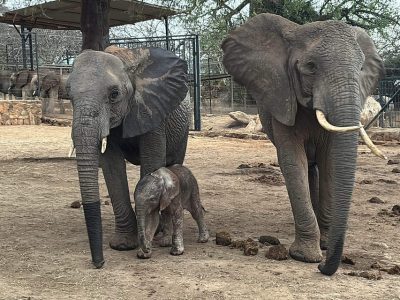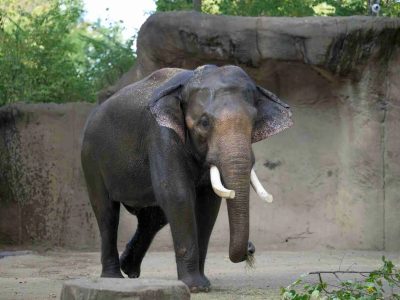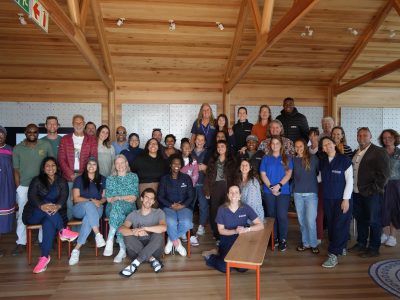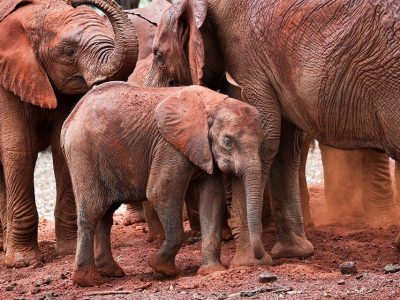

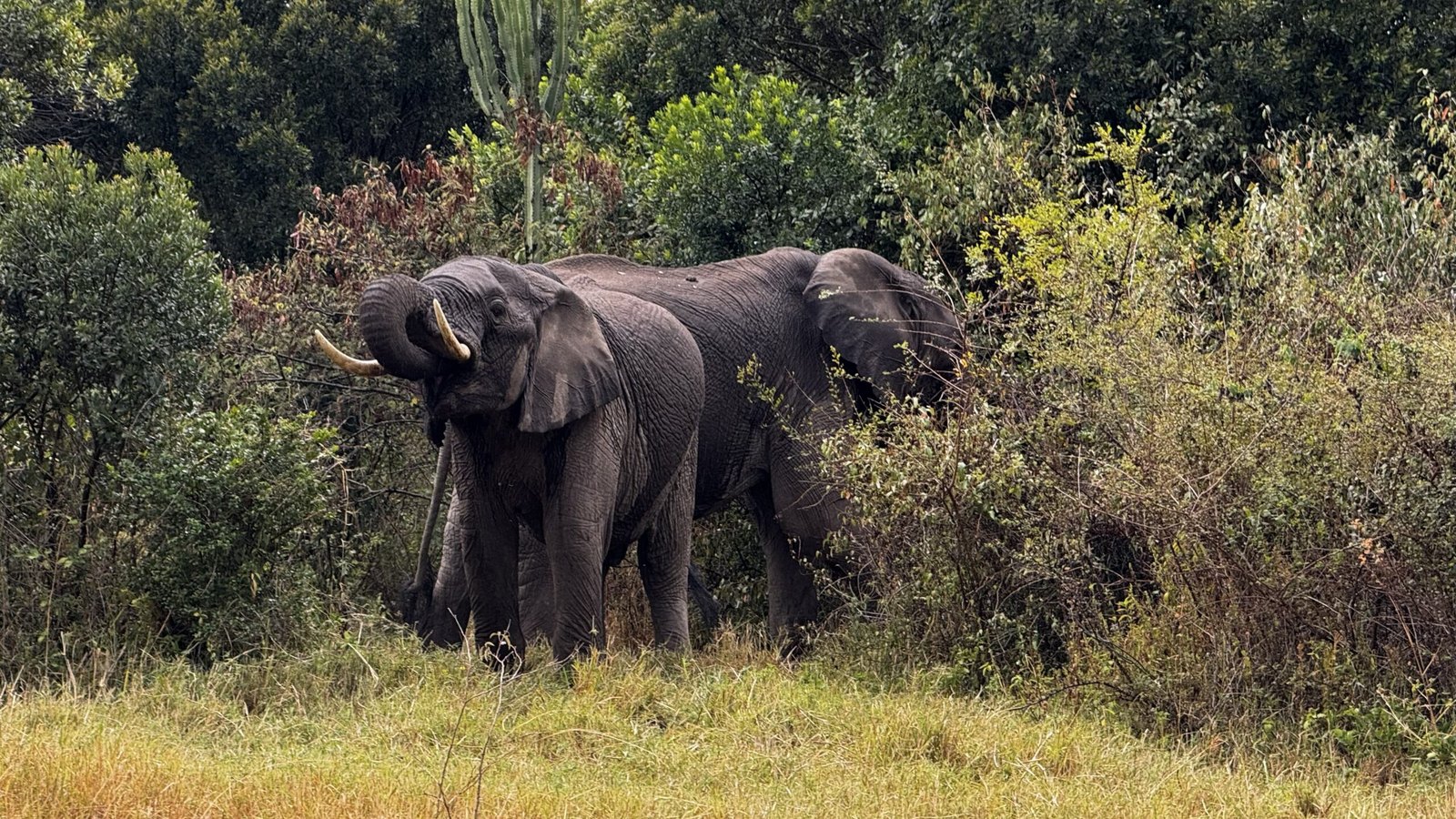
Elephants had not been recorded in Enarau Conservancy, in Kenya’s Greater Maasai Mara, for more than 30 years. In the summer of 2026, a group of Los Angeles high school students on a Los Angeles Zoo scholarship watched two bulls pulling branches off trees a few minutes’ drive from their camp.
The account comes from Jenna Thomas, a 2026 fellow of the zoo’s Duttenhaver Conservation Field Study Program, writing on the zoo’s blog. Half her group had just come back from collecting camera traps when they started shouting. “Instantly, everyone in camp dropped what they were doing, ran for the jeeps, and piled in,” she wrote. “All of us were in disbelief that we might actually see one of our conservancy’s target species.”
What is the Duttenhaver Conservation Field Study Program?
A scholarship that puts American teenagers onto real field expeditions. Since 2008 it has sponsored 99 students and 39 mentors to nine countries, and for many of them it is a first trip outside the United States. Eligible applicants are juniors and seniors at North Hollywood Magnet High School and Los Angeles Zoo student volunteers. Awards cover round-trip airfare and most living expenses on the expedition.
The program exists because of one visit. In 2008 Linda Duttenhaver came to the Los Angeles Zoo, asked how she could help, and funded a program modeled on the international study experience that had changed her own trajectory in college, with one condition: that it be tied to actual conservation field research rather than to sightseeing. Students are paired with adult zoo mentors and placed on Earthwatch Institute expeditions, working alongside Earthwatch scientists on data collection and research support.
What did the 2026 team actually do?
Eleven days of unglamorous work in Enarau Conservancy. Bird and mammal transects, which means walking a fixed line and recording every animal detected along it, so that counts from different years can be compared rather than merely felt. Land degradation surveys. Camera trap deployment and collection. Removal of invasive plants including jimsonweed. Measuring plant growth in experimental plots. Moving a mobile boma, the portable livestock enclosure that lets herders rotate grazing and keep stock safe at night without fencing wildlife out permanently.
“Though our transects, invasive species removal, and other fieldwork were tiring and physically demanding, every sore muscle and thorn caught on our clothes was worth it,” Thomas wrote, “especially when we were rewarded by seeing elephants back in Enarau and getting to walk beside two wild white rhinos.”
Evenings ran as a seminar. One of the expedition’s lead researchers, Dr. Stewart Thompson, and others presented on rhino conservation, mountain gorilla research in Uganda and tiger studies in India. The fellows also spent their free time with the Enarau research crew, playing cards and sitting around the fire trading songs and dances.
Why the elephants matter, and what we can and cannot say
African savanna elephants are listed by the IUCN Red List as Endangered under criterion A2bd, in an assessment last completed on November 13, 2020, published in 2021 and amended in 2022, with the population trend given as decreasing. The Red List publishes no global figure for mature individuals, so we are not going to supply one.
Nor will we claim that this program brought the elephants back. Nobody involved says that. What the fellows did was help build the record that shows they are there: the transects, the camera traps and the degradation surveys are how a conservancy demonstrates a recovery rather than hoping for one, and that data is what a habitat restoration project is eventually judged on.
Tracing the money
We look for the accredited zoological institutions behind field conservation work, because the connection is usually real and usually invisible. Here it is neither hidden nor indirect. The Los Angeles Zoo and Botanical Gardens runs this program, supplies the adult mentors and administers the scholarships, funded by a named private donor, Linda Duttenhaver, who has backed it for more than 16 years. The field science is Earthwatch Institute’s. The zoo’s contribution is the pipeline: taking students from two Los Angeles feeder groups and putting them, at no cost to their families, onto a research crew in the Mara.
That is a smaller claim than saving a species and a more durable one. “I have never felt so engaged and filled with purpose,” Thomas wrote of the fieldwork. Accounts from past expeditions are on the program’s page.
For other traces of accredited zoo funding into African field work, see our reporting on the scimitar-horned oryx downlisting and on the zoos behind Gorilla Doctors.
Quick answers
- What is the Duttenhaver Conservation Field Study Program?
A Los Angeles Zoo scholarship that places high school students and adult zoo mentors on Earthwatch Institute research expeditions. Since 2008 it has sponsored 99 students and 39 mentors to nine countries.
- Who can apply?
Juniors and seniors at North Hollywood Magnet High School and Los Angeles Zoo student volunteers. Awards cover round-trip airfare and most living expenses.
- What did the 2026 Kenya team do?
Eleven days in Enarau Conservancy running bird and mammal transects, land degradation surveys, camera traps, invasive plant removal and experimental plot measurements.
- Are African elephants endangered?
The IUCN Red List lists the African savanna elephant as Endangered under criterion A2bd, assessed in November 2020 and amended in 2022, with a decreasing trend.