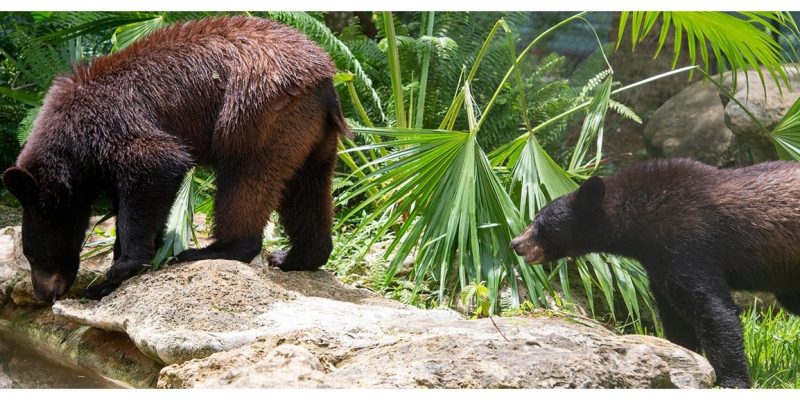
Two orphaned American black bears, Bentley and Treena, are on view at Flamingo Gardens in Davie, Florida, living in a 10,000-square-foot naturalistic habitat after a rescue in Georgia that began when they were roughly seven weeks old. Their mother was killed. The rest of this is about what happened next, which is the part worth knowing.
The cubs were recovered in the Bent Tree community in Georgia after a community search effort, and they were named for the place that found them. They went into care at the Chestatee Wildlife Preserve, where they were hand-raised. By the time Flamingo Gardens announced they were coming, they were about 14 months old.
Why bottle-fed cubs cannot be released
This is the mechanism that decides a bear’s whole life, and it is worth stating plainly because it is not obvious. A cub orphaned young enough has to be bottle-fed by people to survive at all. Doing it saves the animal and simultaneously removes the thing that would let it go back: a bear that learned to associate humans with food does not unlearn it. Released, it goes looking for people, and a bear that goes looking for people in the southeastern United States does not have a long future.
So “non-releasable” is not a judgment about an animal’s health. It is a description of what its early weeks taught it. Bentley and Treena are non-releasable because somebody kept them alive, which is a trade wildlife caregivers make knowingly every time.
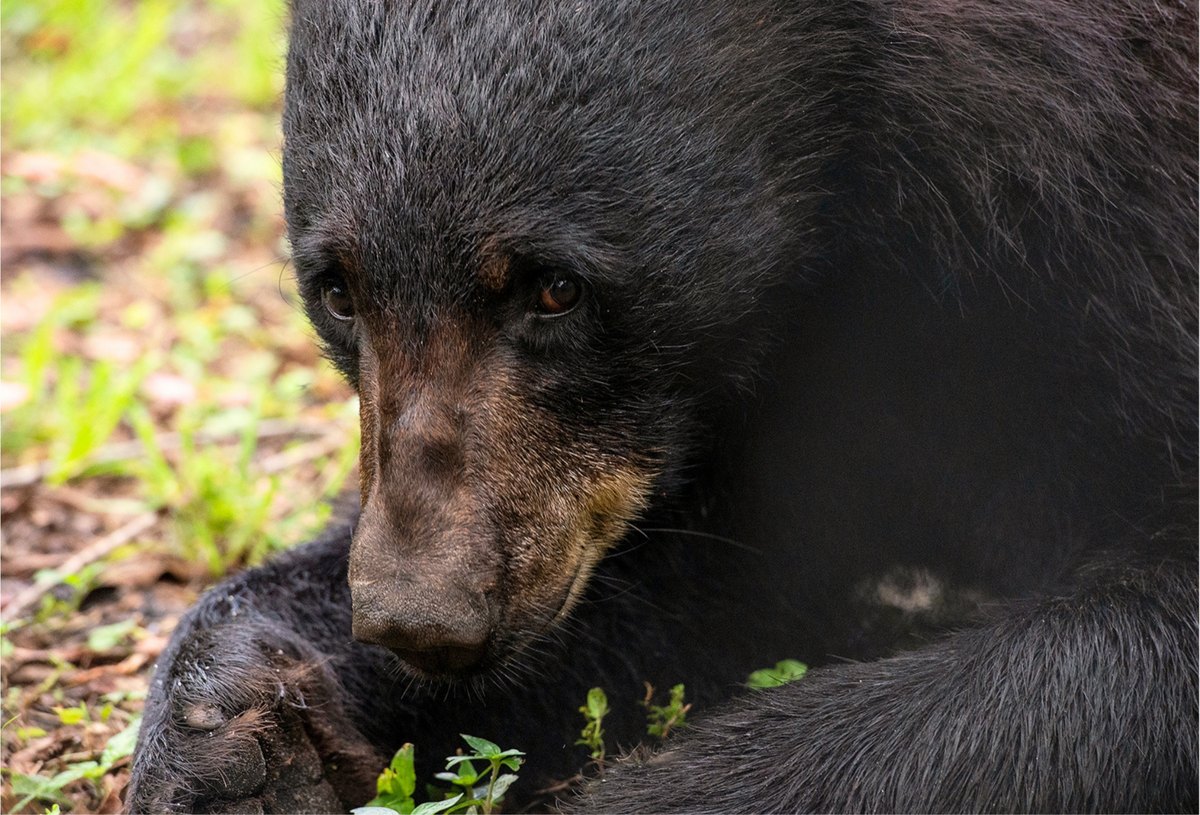
What they have now
The habitat they moved into runs to 10,000 square feet of planted ground, with palmetto and ferns, rock, grass and standing water. For two animals that spent their first year in rehabilitation enclosures, the change is the whole point: space with varied terrain, cover to disappear into, and things to climb and dig and turn over.
“These bears have already touched the hearts of so many people,” said Keith Clark, CEO of Flamingo Gardens. “Their journey is both heartbreaking and hopeful, and we are incredibly proud to provide them with a loving forever home while helping educate our community about wildlife conservation and coexistence.”
Michael Ruggieri, the sanctuary’s Senior Director of Wildlife, framed the educational half the way most facilities do, and in this case it has a sharper edge than usual: “Bentley and Treena will serve as important ambassadors for their species, helping visitors learn about the challenges facing wildlife and the importance of protecting native habitats and respecting wild animals in their natural environments.”
The edge is that the lesson these two teach is partly about us. A bear orphaned by a person, raised by people because there was no alternative, and permanently unable to return because of that raising is a fairly direct illustration of what human and bear overlap costs when it goes wrong.
Where to find them
Flamingo Gardens introduced the bears to the public over a “Beary” Special Weekend on June 6 and 7, and they are listed on the sanctuary’s current roster of resident animals. The Everglades Wildlife Sanctuary at Flamingo Gardens takes in native Florida animals that are injured or otherwise unable to live in the wild, and the bear habitat sits among exhibits representing the five ecosystems of the Everglades. Details are on the sanctuary’s own page, and the arrival was announced in the Gardens’ own release.
Flamingo Gardens has done this before, and recently. It also took in Sabal, a rescued puma kitten, who likewise cannot be returned to the wild. Elsewhere in Florida, Brevard Zoo has been taking in orphaned black bear cubs as well.
Quick answers
- Who are Bentley and Treena?
Two orphaned American black bears living at Flamingo Gardens in Davie, Florida. They were recovered in the Bent Tree community in Georgia after their mother was killed, when they were roughly seven weeks old, and are named for the community that found them.
- Why can't the bears be released back into the wild?
Because they were bottle-fed. A cub orphaned that young cannot survive without hand-rearing, and a bear hand-raised by people learns to associate humans with food and does not unlearn it. That makes them non-releasable, which describes what their early weeks taught them rather than anything about their health.
- Where did the bears come from before Flamingo Gardens?
The Chestatee Wildlife Preserve in Georgia, where they were raised after their rescue. They were about 14 months old when Flamingo Gardens announced they were coming.
- Where do the bears live now?
In a 10,000-square-foot naturalistic habitat at Flamingo Gardens with planted ground, palmetto and ferns, rock, grass and standing water.
- When can I see the bears?
Flamingo Gardens introduced them to the public over a “Beary” Special Weekend on June 6 and 7, 2026, and they are on the Everglades Wildlife Sanctuary's current roster of resident animals.
- What is the Everglades Wildlife Sanctuary?
The part of Flamingo Gardens that takes in native Florida animals which are injured or otherwise unable to live in the wild. Its grounds display the five ecosystems of the Florida Everglades through native planting.