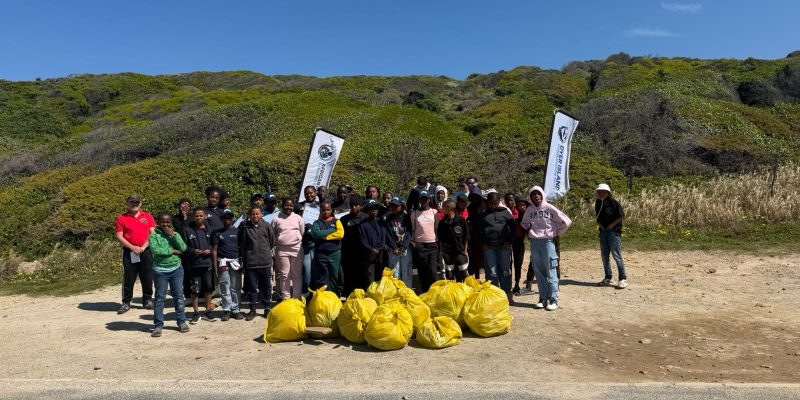
Thirty-four volunteers walked the Kruismansbaai coastline at Danger Point on 19 September 2026 and took 53 kilograms of waste off it. One kilogram of that was ghost gear, pulled from a single fishing line recovery bin. The weights are the small part of the story. The clipboard is the large part.
The Dyer Island Conservation Trust ran the clean-up as its contribution to this year’s International Coastal Clean-Up, under the theme “Building the Science for Africa’s Ocean, Every Piece Counts.”
Counting is the work
Volunteers recorded the type and quantity of everything they collected rather than simply bagging it. That record goes into the marine litter dataset coordinated by the Sustainable Seas Trust, which aggregates the same exercise across many beaches and many years.
A single beach tells you almost nothing. A hundred beaches recorded the same way over a decade tell you which items are increasing, where they are entering the water and which sources are worth regulating. The trust’s framing is that reliable data gives decision-makers an evidence base, and that is the honest reason to make tired volunteers fill in a form before they go home.
Ghost gear, and why it was singled out
This year’s clean-up put a particular focus on ghost gear: fishing equipment that has been lost, abandoned or discarded at sea. Line, rope and netting persist in the marine environment for a long time and keep catching things after nobody is fishing with them, which makes them a standing entanglement risk to seabirds, seals and other marine animals.
The trust runs a Fishing Line Recovery and Recycling Programme, a set of collection bins placed where anglers actually are, and emptied one of those bins during the clean-up. The single kilogram it yielded is a useful number precisely because it is small and came from one point: that is one bin’s worth of line that is not now in the water.
The work is tied to the WESSA Green Coast #StopTheStrangle campaign, which exists to raise awareness of marine wildlife entanglement and to push communities toward returning line to collection points rather than leaving it.
Entanglement is not an abstraction at this organization. It also runs the African Penguin and Seabird Sanctuary at Gansbaai, which is where the animals on the receiving end of this arrive. Our earlier piece on two African penguins and one volunteer covered the other end of the same pipeline.
The funders are real, and none of them paid for this
The Dyer Island Conservation Trust is one of the better documented cases in African conservation of accredited zoological institutions quietly underwriting field work. Its published supporters list names the Association of Zoos and Aquariums and the Zoological Association of America alongside individual institutions including Dallas Zoo, Columbus Zoological Park, Omaha Zoological Society, Metro Richmond Zoo, Tanganyika Wildlife Park, Wildlife World Zoo, Aquarium and Safari Park, Virginia Safari Park, the Two Oceans Aquarium and uShaka Sea World, plus Den Blå Planet in Denmark and Combe Martin Wildlife and Dinosaur Park in the United Kingdom.
That is an organization-level picture, and it should not be stretched. Nothing in this clean-up is credited to any of them. The partners named for this particular morning are the Sustainable Seas Trust, which holds the dataset, and WESSA Green Coast, which runs the campaign. We attach a facility to a story when it happened on their property, they funded it, they supplied the staff or expertise, or it involves animals in their care, and none of those four is true of a beach clean-up at Danger Point. So the supporters are worth naming as context for who keeps this trust running, and worth not claiming as the backers of this.
The next bin will fill. That is rather the point of putting bins out, and of weighing what comes out of them.
Quick answers
- What happened at Kruismansbaai?
On 19 September 2026 the Dyer Island Conservation Trust joined communities, conservation partners and volunteers at Kruismansbaai, Danger Point, for this year's International Coastal Clean-Up. Thirty-four volunteers removed 53 kilograms of waste from the coastline.
- Why record the litter rather than just remove it?
Volunteers logged the type and quantity of everything collected, and that record feeds the marine litter dataset coordinated by the Sustainable Seas Trust. One beach says little; the same exercise repeated across many beaches over years identifies trends, common sources and the places that need attention, which is what gives policy decisions an evidence base.
- What is ghost gear?
Fishing equipment that has been lost, abandoned or discarded in the ocean. Line, rope and netting persist for a long time and pose a serious entanglement risk to seabirds, seals and other marine animals.
- How much ghost gear came out of the bin?
One kilogram. The trust emptied one of its fishing line recovery bins during the clean-up and weighed the contents.
- What is the #StopTheStrangle campaign?
WESSA Green Coast's campaign on marine wildlife entanglement, which the trust's Fishing Line Recovery and Recycling Programme works alongside. It encourages communities to return used line to designated collection points.
- Do zoos and aquariums fund the Dyer Island Conservation Trust?
Many do, at organization level. Its published supporters list names the Association of Zoos and Aquariums and the Zoological Association of America alongside institutions including Dallas Zoo, Columbus Zoological Park, Omaha Zoological Society, Metro Richmond Zoo, Tanganyika Wildlife Park, the Two Oceans Aquarium, uShaka Sea World and Den Blå Planet. None of them is credited with this particular clean-up, which was run with the Sustainable Seas Trust and WESSA Green Coast.