
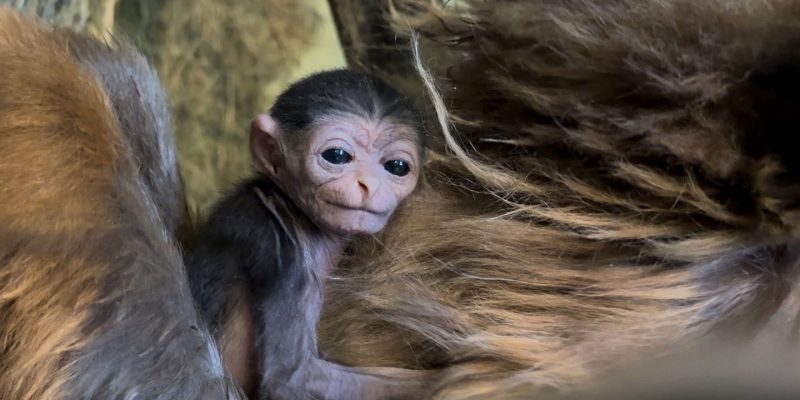
Keoki, a lar gibbon at Cheyenne Mountain Zoo, gave birth to her first baby on Friday, November 6, and her keepers watched the whole thing happen overnight on a security camera. The zoo announced the birth on November 26 and says the infant is nursing well, strong and alert, and still spending nearly all of its time clinging to its mother.
Keoki and the baby’s father, Holmes, arrived in Colorado Springs in 2025 on a breeding recommendation. The baby’s sex has not been determined yet, and the zoo says there are no plans to name it just now.
A first-time mother who seemed to know the job
The useful detail in this birth is not that it happened but that nobody had to intervene. Keoki had never raised an infant, and the overnight camera recorded a labor and a first hour that went the way the care team hoped rather than the way they had prepared for.
“We weren’t sure exactly how Keoki would do as a mom, since this is her first baby, but she has absolutely amazed us,” said Joey De Leo, an animal keeper in Primate World. “We were able to watch her go into labor overnight on the security cameras, and she seemed to know just what to do from the beginning. She immediately began grooming the baby and doing everything she could to care for her baby. We are so proud of her!”
Keepers report that Keoki adjusts her own body to help the baby nurse comfortably and find a secure grip. The infant, for its part, has started looking around, following the keepers with its eyes and head during Keoki’s training sessions.
She is still singing duets, and that matters
Keoki has kept up her routines. She still takes part in training, still approaches her care team for snacks, and still sings duets with Holmes.
A duet is the thing gibbons are famous for: a long coordinated call that a mated pair performs together, male and female taking different parts, carrying a long way through forest canopy. It is worth saying plainly because it doubles as the zoo’s health check. A gibbon that is eating, training, approaching keepers and singing with her mate is a gibbon whose care team can lay eyes on her and her baby several times a day without ever separating them.
Lar gibbon fathers do the work
Holmes has been curious about the baby and has mostly given Keoki room, which is roughly what the care team expected. Unlike many mammal fathers, male lar gibbons take an active part in raising young, and Holmes has history: at his previous facility he was seen carrying his own younger siblings when they were infants. Whether he picks that back up as the baby grows is what the keepers are watching for now.
The birth counts toward the Gibbon Species Survival Plan, the cooperative program accredited North American zoos use to keep a genetically diverse gibbon population in human care.
What the wild picture looks like
The lar gibbon, Hylobates lar, is listed as Endangered on the IUCN Red List under criteria A2cd+3cd. That assessment was made in November 2015 and published in 2020, and the Red List itself flags it as needing an update. The population trend is decreasing, and the assessment gives no global population figure, so any number quoted for wild lar gibbons is coming from somewhere other than the Red List.
They live in Thailand, Myanmar, peninsular Malaysia, Laos and Sumatra, and are listed as possibly extinct in Yunnan, China. Logging, farmland and hunting are the named threats, which is where Cheyenne Mountain Zoo points visitors who ask what they can do. The zoo’s PalmOil Scan app rates companies on whether they source certified sustainable palm oil, and its own staff have spent time with smallholder palm growers in the Ecuadorian Amazon working the supply end of the same problem.
Whether you can see the baby on a given day is genuinely up to Keoki. She and Holmes have access to several indoor and outdoor spaces, the guest-facing habitat in Primate World among them, and where she settles with the infant is her choice. The zoo announced the birth on November 26.
Quick answers
- When was the baby lar gibbon born at Cheyenne Mountain Zoo?
Friday, November 6, 2026. The zoo announced the birth on November 26.
- Who are the parents?
Keoki, the mother, and Holmes, the father. They arrived at Cheyenne Mountain Zoo in 2025 on a breeding recommendation, and this is their first baby. Keoki is pronounced key-OH-key.
- Is the baby a male or a female, and does it have a name?
Neither has been settled. The zoo has not determined the sex yet and says there are no plans to name the infant just now.
- Can visitors see the baby gibbon?
Sometimes. Keoki and Holmes have access to several indoor and outdoor spaces including the guest-facing habitat in Primate World, and whether the baby is visible on a given day depends on where Keoki chooses to spend her time.
- Are lar gibbons endangered?
Yes. The IUCN Red List lists Hylobates lar as Endangered under criteria A2cd+3cd, with a decreasing population. The assessment was made in November 2015, published in 2020, and is annotated as needing an update. It gives no global population estimate.
- What is a gibbon duet?
A long coordinated call a mated pair performs together, with the male and female taking different parts. Keoki has gone on singing them with Holmes since the birth, which is one of the ways her care team checks on her without separating her from the baby.