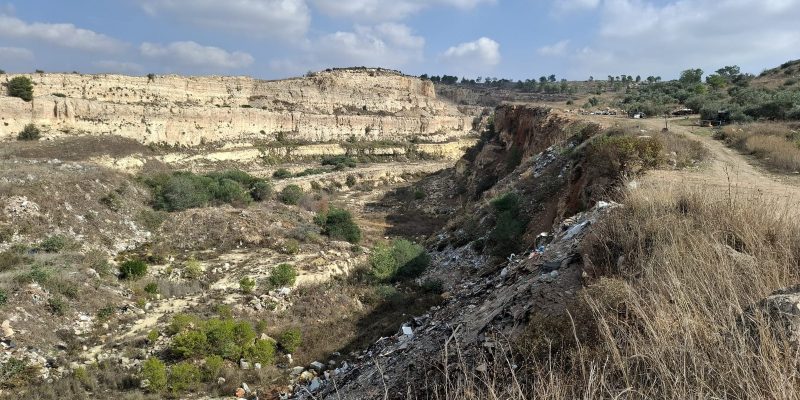
Israeli enforcement officers seized a truck and a wheel loader and detained three people for questioning after documenting them dumping construction waste inside Tzur Natan National Park, a declared national park in central Israel.
The Israel Nature and Parks Authority published the account on November 19. The operation ran on Monday, November 16, and brought together the Green Police of the Ministry of Environmental Protection, the Nature and Parks Authority, officers from the Taibe police station in the Central District, and police from the environmental protection unit. It targeted two things at once: an unlicensed waste transfer station in Taibe, and the dumping of construction waste on national park land.
Months of watching first
The raid followed an undercover investigation and a period of observation carried out over recent months. What prompted it was not the dumping itself but what came after: repeated waste fires that produced odor nuisance and air pollution across the area, and which the authorities set out to trace back to whoever was feeding them.
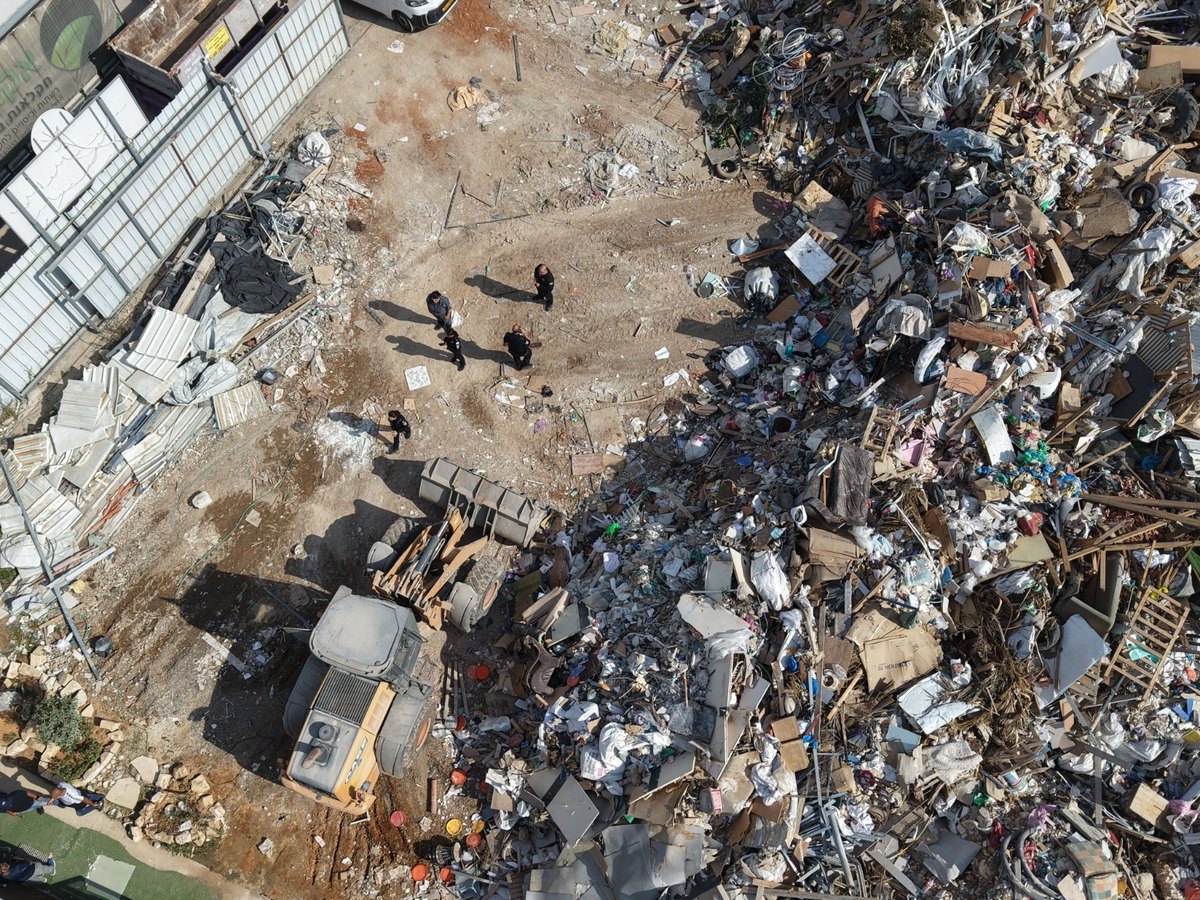
Officers searched the transfer station’s offices and the vehicles involved, and seized a truck and a wheel loader that had been documented leaving the unlicensed station and tipping construction waste inside the declared national park. Three suspects were detained for questioning on suspicion of offenses under Israel’s Cleanliness Maintenance Law, the Business Licensing Law, and the National Parks and Nature Reserves Law. No charges have been announced.
The motive the authority describes is ordinary economics. Licensed, regulated landfill sites exist nearby, and using them costs money. Dumping on open ground does not, which is how a national park becomes the cheaper option.
What the officials said
Tal Rotem, who heads inspection, enforcement, investigations and intelligence for the Nature and Parks Authority’s Central District, put the damage in terms of what lives there. In the original Hebrew: “תופעת זריקת הפסולת בשטחים הפתוחים היא תופעה כואבת שמזהמת לנו את הסביבה ומהווה סכנה ממשית לבריאות הטבע, בעלי החיים והאדם כאחד.” In English: “The phenomenon of dumping waste in open areas is a painful one that pollutes our environment and poses a real danger to the health of nature, animals and people alike.” (Translation by ZooReviews.)
Yossi Bar, director of the Green Police at the Ministry of Environmental Protection, pointed at the fires. In the original Hebrew: “השלכת פסולת בניין בשטחים פתוחים ובגנים לאומיים היא פגיעה חמורה בסביבה, בנוף ובאיכות חיי התושבים, בייחוד כאשר הפסולת בוערת וגורמת למפגעי עשן, ריח וזיהום אוויר קשים באזור.” In English: “Dumping construction waste in open areas and in national parks is a serious injury to the environment, to the landscape and to residents’ quality of life, especially when the waste burns and causes severe smoke, odor and air pollution in the area.” (Translation by ZooReviews.)
Shimon Barda, deputy commander of the Taibe station, said the police would continue to act against those endangering public health through unlicensed dumping. The bodies involved said they would keep working together to increase supervision of open areas.
Why a waste case belongs on a conservation page
Nothing in this story has fur or feathers, and the Nature and Parks Authority named no species affected. It is still habitat enforcement. A declared national park is a legal boundary drawn around land, and the boundary is only worth the amount of enforcement behind it. Construction rubble tipped down a slope buries the ground layer where it lands; waste fires burning in a protected area are a different kind of damage again, and the smoke does not stop at the park line.
We covered this authority’s last enforcement case four days ago, when about sixty birds were found hidden in a car at the Rabin Crossing. Seizures of smuggled animals make the better photograph. Keeping a national park from being used as a landfill is the less visible half of the same job.
Which zoos or aquariums were involved?
None. This was a government enforcement operation run by Israel’s environmental ministry, its national parks authority and its police, and we found no accredited zoological institution funding, staffing or otherwise party to it. We note the absence rather than leave the question hanging: on conservation stories we go looking for the zoo or aquarium behind the work, and on this one there is not one to name.
Quick answers
- What happened at Tzur Natan National Park?
In a joint operation on Monday, November 16, 2026, Israeli enforcement bodies seized a truck and a wheel loader documented tipping construction waste inside the declared national park, and detained three people for questioning. No charges have been announced.
- Which agencies ran the operation?
The Green Police of the Ministry of Environmental Protection, the Israel Nature and Parks Authority, officers of the Taibe police station in the Central District, and police from the environmental protection unit.
- What prompted the investigation?
Repeated waste fires that caused odor nuisance and air pollution in the area. Months of undercover investigation and observation followed, aimed at identifying who was responsible.
- What laws are the suspects alleged to have broken?
Israel's Cleanliness Maintenance Law, the Business Licensing Law, and the National Parks and Nature Reserves Law. They were detained for questioning on suspicion of these offenses; no charges have been announced.