Customs inspectors at the Rabin crossing on Israel’s border with Jordan stopped a car on 16 November and found about sixty live birds hidden inside it. Parrots, goldfinches and other cage birds had been packed into various cavities in the vehicle, which had two people in it. The birds were taken out alive and handed to Israel’s veterinary services.
What was found, and where
The seizure happened during a routine inspection of a vehicle arriving from Jordan. The two occupants, a couple from East Jerusalem, were detained, and investigators from the Israel Tax Authority and from the Nature and Parks Authority were called to the crossing to question them. The Nature and Parks Authority put the count at roughly sixty birds.
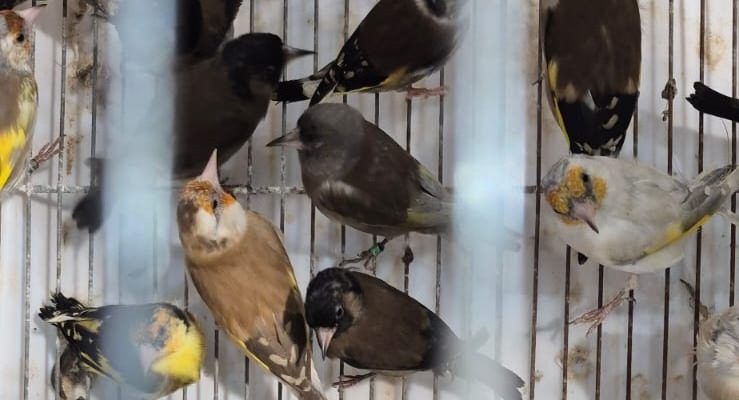
The authority’s own photograph of the seizure shows a cage floor crowded with finches: European goldfinches with their red and black faces and yellow wing bars, several paler yellow birds of the kind kept by cage bird breeders, and one bird already wearing a numbered leg ring.
Why goldfinches
The European goldfinch is the bird at the center of a long running songbird trade in this region, and it is protected in Israel. It is a small, loud, extremely ornamental finch, it is listed as Least Concern on the IUCN Red List as a global species, and none of that protects an individual bird from being stuffed into a door cavity for a border crossing. Trapping and trading protected songbirds is an offense in Israel, and enforcement cases of this shape turn up regularly: the authority publishes them because the market only works while the birds keep arriving.
What the authority has not yet published is the ending. The birds went to the veterinary services for care, and the release says nothing about how many survived the crossing, what species they were in detail, or what happens to them next. Birds seized in trade cases are not simply let go. They are quarantined, assessed, and in many cases cannot be returned to the wild at all, because nobody can say where they were caught or what they may be carrying.
No zoo in this one
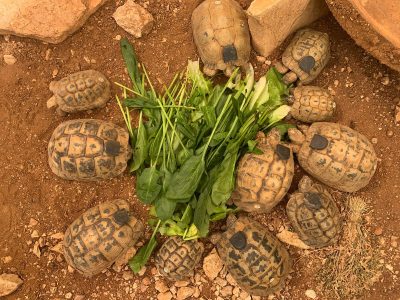
We looked for a zoological institution in this case and did not find one. The birds are in the hands of a government veterinary service, not a zoo or a rescue center, and no accredited facility is named anywhere in the authority’s account. That is the honest answer, and it is a useful contrast with the confiscated tortoises the same authority released two weeks ago, where a reserve, a rehabilitation enclosure and months of veterinary work stood between the seizure and the animals going back out.
Written from the Nature and Parks Authority’s Hebrew release, published 16 November 2026. For what the long version of this process looks like when it works, see our report on thirty-six seized tortoises going back to open ground, each one tagged.
Quick answers
- What was seized at the Rabin crossing?
About sixty live birds, described by the Israel Nature and Parks Authority as parrots, goldfinches and other cage birds. They were hidden in various cavities inside a vehicle arriving from Jordan on 16 November 2026.
- What happened to the people in the car?
The two occupants, a couple from East Jerusalem, were questioned at the crossing by investigators from the Israel Tax Authority and from the Nature and Parks Authority.
- Where did the birds go?
They were handed to Israel's veterinary services for care. The authority has not published how many survived, nor what happens to them next.
- Is the European goldfinch endangered?
No. It is listed as Least Concern on the IUCN Red List as a global species. It is separately protected under Israeli law, which is what makes trapping and trading it an offense there.