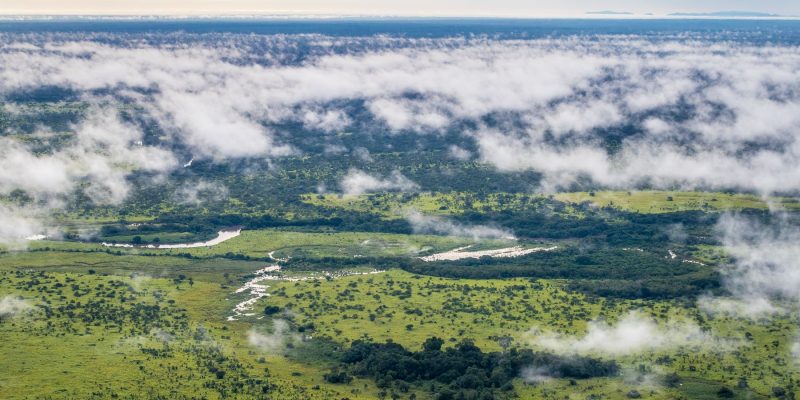
Conservation money is usually paid out at the front. A donor funds a plan, the plan is carried out, and a report follows. African Parks has just been paid a different way: the Rob Walton Foundation has committed $4.6 million as an outcomes-based grant, and what it is buying is evidence that four protected areas stayed intact.
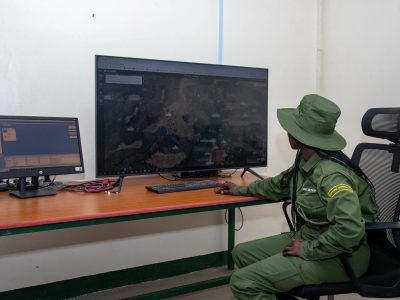
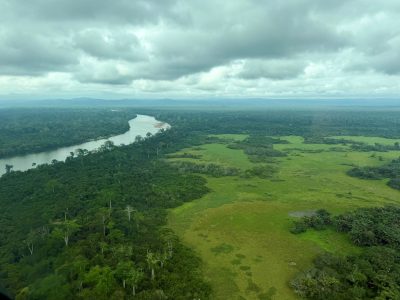
The announcement came on 21 September 2026. The money supports biodiversity monitoring, community development and park infrastructure at four sites: Majete Wildlife Reserve in Malawi, Odzala-Kokoua National Park in the Republic of Congo, Garamba National Park in the Democratic Republic of the Congo and Zakouma National Park in Chad.
What is a Verifiable Nature Unit?
The grant is paid against something called a Verifiable Nature Unit, and the term is worth slowing down for, because the whole arrangement rests on it.
One VNU represents one square kilometer of nature where ecological integrity has been maintained or improved over an annual period, and it is priced at the actual cost of achieving and sustaining that result. That is the unusual part. A carbon credit counts a tonne of gas that was not emitted. A VNU counts a square kilometer that is still working, and attaches to it what it cost to keep working.
Because the unit is independently verified, African Parks describes it as a performance metric rather than a product, one that can sit underneath several different financing arrangements: pay-for-performance grants, straight donations, nature contributions, bonds and credits. The Rob Walton Foundation’s commitment is the first of those shapes, a grant that pays on proof.
“We see VNUs as an exciting mechanism for directing capital toward verified conservation outcomes,” said Duko Hopman, executive director of the Rob Walton Foundation. “They offer a compelling model for philanthropy today, while helping demonstrate how rigorous, measurable conservation outcomes could support a broader range of financing approaches over time.”
Why the unit matters more than the sum
$4.6 million is not a large number against African Parks’ footprint. The organization lists 23 protected areas in 13 countries on its own site, and four of them are in this grant. Taken as a donation it would be unremarkable.
Taken as a demonstration it is a different thing. African Parks says its long-term aim is to build the infrastructure that would let protected areas raise sustained, scalable finance, and that the next steps are reissuing VNUs, scaling projects, and extending their use to additional financial instruments. In other words the grant is partly a test of whether the unit can be sold at all, and to whom.
That matters because the alternative is the annual appeal. Protected areas in this part of the world are funded year to year by philanthropy, aid budgets and lottery proceeds, all of which can be withdrawn by people who have never seen the place. A unit that a pension fund or a bond market can price is an attempt to get off that treadmill. Whether anyone buys it is not yet settled.
Which zoos are paying for this?
None, as far as we can establish, and we looked.
We read African Parks’ own partners page, which is the organization’s public list of who funds it. It names about thirty-five funders and strategic partners. They are foundations, lotteries, governments and individuals: the Wyss Foundation, the Dutch Postcode Lottery, the Howard G. Buffett Foundation, the European Union, the Global Environment Facility, the U.S. Fish and Wildlife Service, WWF, the Rob Walton Foundation itself. Not one accredited zoo or aquarium appears on it, and none appears in the announcement either.
We say that plainly because the alternative is to imply a connection that is not there. It is the same answer we reached on African Parks’ priority support plan with Gabon, and the honest finding is worth more than a forced one.
For scale on the other side of that question: the Association of Zoos and Aquariums reports that in 2025 its 235 accredited and certified facilities spent approximately $372.4 million on conservation across 139 countries. No published breakdown isolates how much of that reached Africa, so we are not going to estimate one. What can be said is that the money behind this particular instrument is foundation money, and the zoo sector is not in the room.
Quick answers
- What is a Verifiable Nature Unit?
One VNU represents one square kilometer of nature where ecological integrity has been maintained or improved over an annual period, priced at the actual cost of achieving and sustaining that result.
- How much money is involved and who gave it?
The Rob Walton Foundation committed $4.6 million as an outcomes-based grant, announced by African Parks on 21 September 2026.
- Which parks does the grant cover?
Majete Wildlife Reserve in Malawi, Odzala-Kokoua National Park in the Republic of Congo, Garamba National Park in the Democratic Republic of the Congo and Zakouma National Park in Chad.
- How is a VNU different from a carbon credit?
A carbon credit counts a tonne of greenhouse gas that was not emitted. A VNU counts a square kilometer whose ecological integrity was maintained or improved, and attaches to it what it cost to achieve that.
- What is the money actually spent on?
African Parks says it supports biodiversity monitoring, community development and park infrastructure across the four protected areas.
- Do any zoos or aquariums fund African Parks?
Not according to African Parks. Its own partners page lists about thirty-five funders and strategic partners, all of them foundations, lotteries, governments, NGOs or individuals, and no accredited zoo or aquarium appears on it.