For years the Cheetah Conservation Fund has said the same sentence: fewer than 7,500 cheetahs, on roughly 9 percent of the range the species once had. This week its head of genetics wrote a new one. Fewer than 7,000.
The number did not fall because a single survey found 500 fewer animals. It fell because the population estimate is an assembled thing, built from many studies across many countries, and the assembly now reaches places nobody had systematically counted before. Dr Anne Schmidt-Küntzel, who set up the Fund’s genetics laboratory in Otjiwarongo, Namibia and has run it for more than twenty years, puts the two halves of that together in one line: the same research that documents the decline also produces the tools for recovery.
What a scat sample can tell you
Cheetahs cannot be counted the way antelope or elephants can. They are thin on the ground, they move a long way, and they are not standing in a herd when the plane goes over. So the laboratory counts them without seeing them.
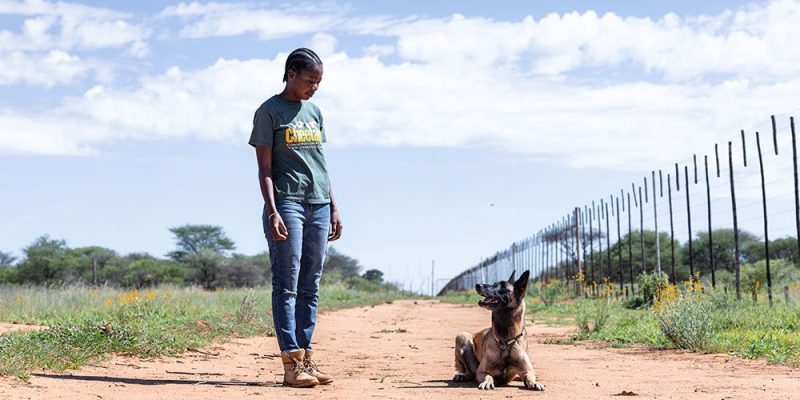
From one scat sample, Schmidt-Küntzel writes, the lab can identify the individual animal, determine its sex, assess its diet, evaluate its health, and map how it connects to other populations. Nothing in that list requires catching or disturbing the cheetah. The samples themselves are found by trained scat detection dogs, which cover more than 100 kilometers of transects a year on the Fund’s own land and work further afield in Namibia and into Angola. A visiting master’s student from Wageningen University used them to search 415 trees and collect 113 candidate cheetah scat samples for analysis.
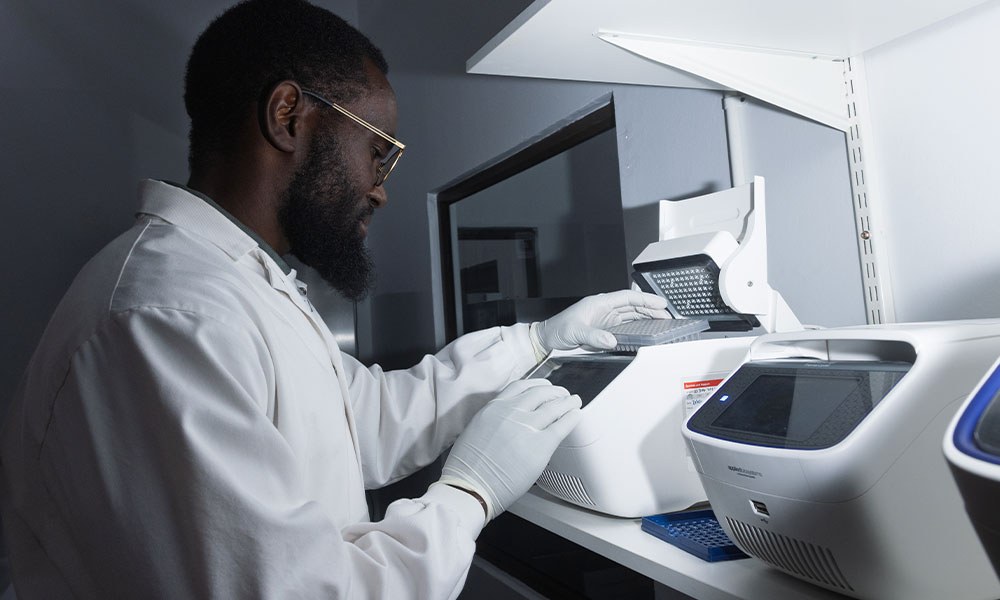
The Fund describes the Otjiwarongo laboratory as the only in-situ genetics laboratory at a frontline conservation center in Africa. In-situ is the term of art worth keeping here: the samples are analyzed in the country they come from, by people who live there, rather than shipped to a university in Europe or North America and analyzed by someone who will never see the animal. That is the difference between a laboratory in Africa and African samples in a laboratory.
This year the lab hosted a workshop on Nanopore sequencing to bring the technology in house. Next year it plans to apply that and real-time PCR to studies of feline coronavirus, on a grant it has just received.
Confiscated cubs are a data set
The hardest part of the range to count is the Horn of Africa, where cheetahs are taken as cubs for the illegal pet trade. The Fund’s field teams in Somaliland are deploying camera traps alongside genetic sampling in the Awdal region. So far every sample analyzed has come back as another species, which the Fund reads as an argument for more funding rather than as an absence of cheetahs, and notes it has no detection dogs there.
What it does have in Somaliland is a rescue center caring for more than 125 confiscated cheetahs that cannot be returned to the wild. Each genetic sample from a confiscated cub helps trace where the animal was taken from, map trafficking routes, and describe the structure of wild populations that cannot yet be reached any other way.
That work has already changed a listing argument. A 2023 paper in Conservation Science and Practice analyzed 55 cheetahs confiscated in Somaliland and found that 100 percent were the Northeast African subspecies, Acinonyx jubatus soemmeringii. The authors, Schmidt-Küntzel among them, put the subspecies at an estimated 260 to 590 mature individuals in continued decline and urged that it be reclassified as endangered, with critically endangered worth investigating. One of the co-authors is Hafeni Hamalwa, who started in the Otjiwarongo lab as an intern and is now its laboratory manager.
We have watched that laboratory do the same trick at a smaller scale before, when it settled the paternity of a wild litter from samples collected in the field.
The IUCN numbers, and what each one counts
The Red List assesses the cheetah as Vulnerable, under criteria A4b and C1, in an assessment by Durant, Groom, Ipavec, Mitchell and Khalatbari dated May 17, 2021 and published in 2022. It gives a global population tentatively estimated at 6,500 mature individuals, with a projected continuing decline, and a population reduction of 37 percent across three generations between 2017 and 2032.
That sits below the Fund’s figure, and the two are not in conflict. The assessment’s own population section cites Durant et al. 2017 for roughly 6,517 mature individuals and 7,100 adult and adolescent animals, confined to 9 percent of the species’ historical range. Mature individuals and adults-plus-adolescents are different quantities. The Fund is quoting the larger one, and its 9 percent is the assessment’s own figure.
Where we would gently differ is only on vintage. The assessment is four years old and the Fund’s number is this week’s, so the honest reading is that the Red List figure is the published baseline and the Fund’s is a working revision from the organization doing much of the fieldwork underneath it. Both are worth citing, and worth saying which is which.
Which zoo pays for the laboratory
We looked, and could not name one.
The Fund does not publish a partner or supporter list. Its 2024 visual annual report names a single zoological institution anywhere in it, Wilhelma Zoo in Stuttgart, and names it as a partner of the Livestock Guarding Dog Program’s snake aversion training rather than of the genetics work. The institutions named in connection with the laboratory in this piece are universities: Wageningen, the University of Namibia, Cornell, plus the Rufford Foundation for a graduate project.
The closest thing to a match is the Phoenix Zoo, which says on its own conservation page that it supports research assessing the genetic health and relatedness of wild cheetah populations in Namibia and Kenya through the AZA SAFE Cheetah program. That is a precise description of the kind of work this laboratory does, in the two countries this laboratory works in. The zoo names no recipient organization, so we are not going to supply one. The Association of Zoos and Aquariums and the Fund jointly lead International Cheetah Day each December, which is a partnership of a different kind and not a funding line.
So: no accredited zoo or aquarium can be verified as funding the Otjiwarongo genetics laboratory. That is a finding, and it is a slightly surprising one for a facility that has been central to cheetah science for two decades.
Source: Cheetah Conservation Fund, “The Fall and Rise of the Cheetah” by Anne Schmidt-Küntzel, 13 October 2026. The Red List assessment was read in full from the copy published by CMS, because iucnredlist.org returns 403 from both of our machines. The subspecies paper is doi:10.1111/csp2.13052.
Quick answers
- How many cheetahs are left?
The Cheetah Conservation Fund now says fewer than 7,000, revised down from the fewer than 7,500 it had cited for years. The IUCN Red List assessment gives a global population tentatively estimated at 6,500 mature individuals. Those are different quantities and both are in use.
- Why did the number change?
Not because one survey found 500 fewer animals. The estimate is assembled from many studies across many countries, and genetic sampling, camera trap surveys and community partnerships now reach areas that had never been systematically studied. The Fund says the same research that documents the decline produces the tools for recovery.
- What is the Red List category?
Vulnerable, under criteria A4b and C1, in an assessment by Durant, Groom, Ipavec, Mitchell and Khalatbari dated 17 May 2021 and published in 2022. It cites a 37 percent population reduction across three generations between 2017 and 2032, and a continuing decline.
- What can a laboratory learn from a scat sample?
The individual animal, its sex, its diet, its health, and how it connects to other populations, without catching or disturbing the cheetah. Trained scat detection dogs find the samples, covering more than 100 kilometers of transects a year on the Fund’s own land and working across Namibia and into Angola.
- What is in-situ about the laboratory?
That the samples are analyzed in the country they come from, by people based there. The Fund describes its Otjiwarongo laboratory as the only in-situ genetics laboratory at a frontline conservation center in Africa.
- What does the Somaliland work involve?
Camera traps and genetic sampling in the Awdal region, where cheetahs have never been systematically counted, and a rescue center caring for more than 125 confiscated cheetahs that cannot be returned to the wild. Genetic samples from confiscated cubs help trace where animals were taken from and map trafficking routes.
- Has that genetic work changed anything?
Yes. A 2023 paper in Conservation Science and Practice analyzed 55 cheetahs confiscated in Somaliland, found all 55 were the Northeast African subspecies Acinonyx jubatus soemmeringii, estimated 260 to 590 mature individuals in continued decline, and urged that the subspecies be uplisted to endangered.
- Which zoo funds the laboratory?
We could not verify one. The Fund publishes no partner list, and its 2024 visual annual report names a single zoological institution, Wilhelma Zoo in Stuttgart, as a partner of its Livestock Guarding Dog Program rather than of the genetics work. The Phoenix Zoo says it supports cheetah genetic-health research in Namibia and Kenya through AZA SAFE Cheetah but names no recipient organization, so we are not going to supply one.