Until last week, a gorilla at the Mefou sanctuary outside Yaounde who needed an X-ray had to leave the sanctuary to get one. That meant anesthesia, a vehicle, a road, and a round trip, imposed on an animal already hurt enough to need imaging. The alternative was for the veterinary team to decide what was wrong from the outside and hope.
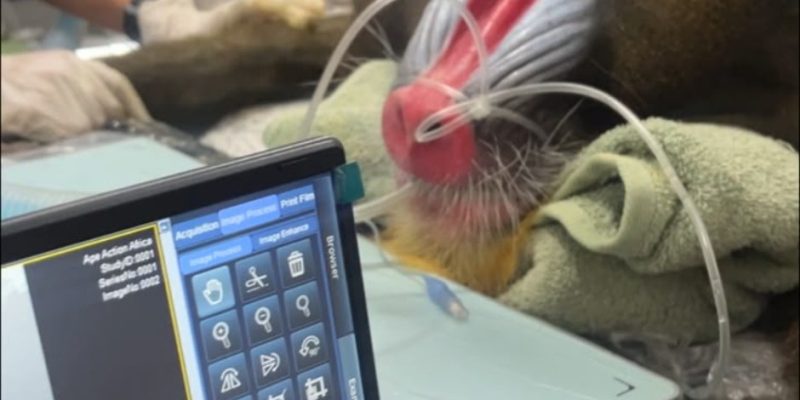
Ape Action Africa now has an X-ray machine in its own veterinary clinic, a gift from the organization’s honorary president, Eran Moas. The sanctuary announced it on October 12 with two radiographs and a photograph of the first patients.
Almost 300 primates, and no way to look inside any of them
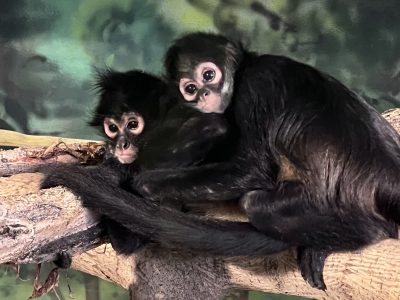
Mefou holds close to 300 rescued gorillas, chimpanzees, mandrills and guenons, most of them confiscated from the bushmeat and pet trades. At that number, the sanctuary is not running an occasional veterinary case. It is running a hospital, and until now it was a hospital without imaging.
The gap shows up in two different kinds of work. The first is routine: a scheduled health check where the point is to confirm that nothing is wrong internally, which is the sort of thing a veterinarian can only do by looking. The second is trauma, where the question is whether a bone is broken, whether a fracture is healing, whether something has been swallowed, and whether a repair is holding. Both were being handled by observation from outside or not at all.
Kibu and Njoya
The first images the sanctuary published are of two animals. Kibu is one of Mefou’s silverback western lowland gorillas, and his was the routine case: a scheduled health check with imaging included, done to establish that he is well rather than because anyone thought he was not. That is the use that changes most. Proactive imaging is the kind of care that only exists when the machine is in the building, because nobody anesthetizes an adult western lowland gorilla and drives him into Yaounde on the chance of finding nothing.
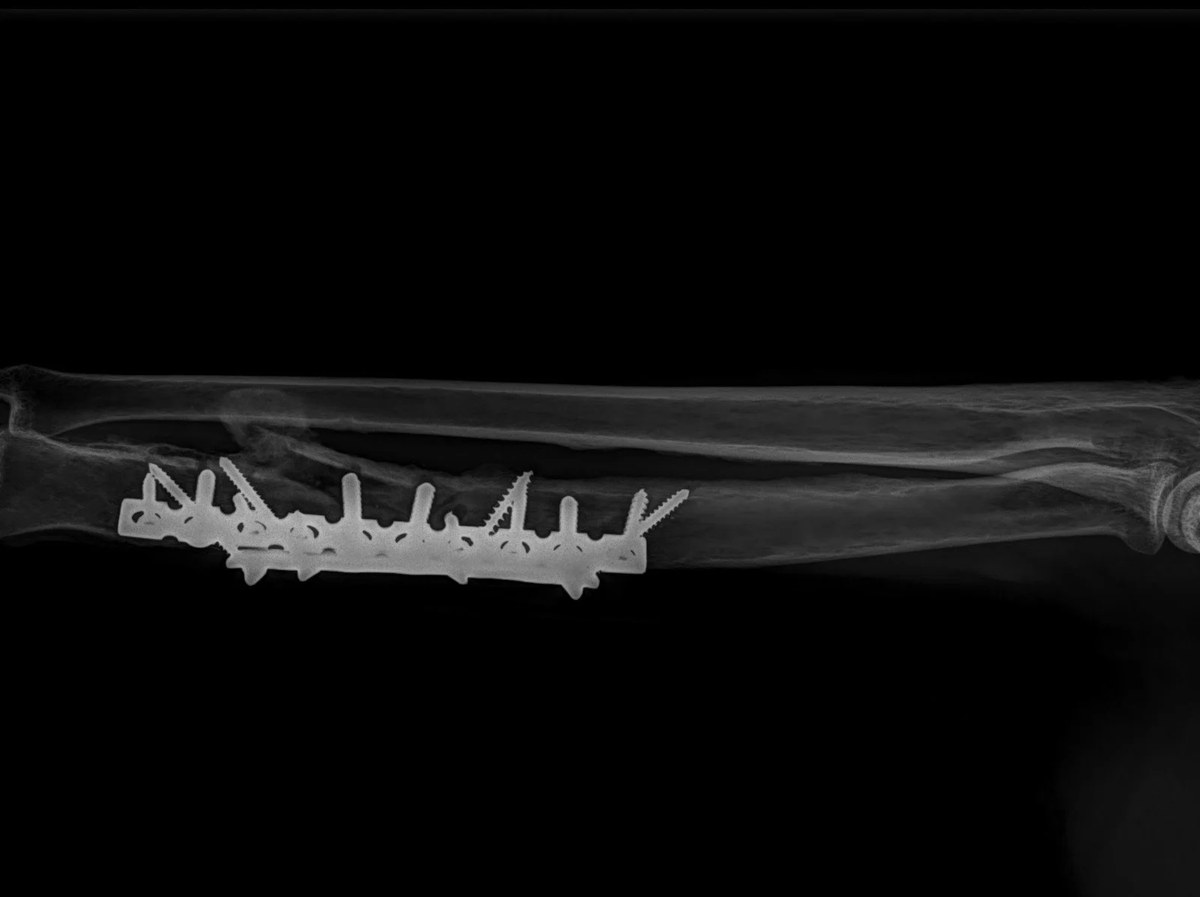
Njoya is a male mandrill who fractured his arm and needed reinforced steel plates to stabilize it. His radiograph shows the hardware seated along the bone, which is exactly the picture a surgeon needs and could not previously get without shipping the patient. Monitoring a repair like that is a sequence of images over months, not one image once, and a sanctuary that has to arrange transport for each of them generally does not get the sequence.
Which zoos paid for this, and which did not
This machine was not bought by a zoo. Eran Moas, the organization’s honorary president, paid for it personally, and Ape Action Africa says so plainly rather than folding it into a general thank-you. We went looking for an accredited zoological institution behind this particular piece of equipment and there is not one.
There are zoos behind the clinic it sits in. Ape Action Africa’s own partner list names Apenheul Primate Park in the Netherlands, Prague Zoo and Twycross Zoo in the United Kingdom, and Twycross is the one that publishes its side of the arrangement in detail. Twycross Zoo states that in 2016 it provided financial support toward the sanctuary’s running costs, that its chief executive and Life Sciences Director visited that year to advise on veterinary care and group management, and that in 2017 two of its keepers and its Veterinary Services Manager went out to train staff and work on veterinary care directly. That is money, staff and expertise, documented by the institution that supplied them.
The distinction is worth keeping straight, because the two facts point in different directions and both are true. Zoos have funded and staffed veterinary care at Mefou. Zoos did not buy this X-ray machine. We have been round this loop before at the same sanctuary: the two-room laboratory Ape Action Africa was asking the public to fund this month is a separate project from the imaging suite, and the clinic is being assembled piece by piece from whoever will pay for the next piece.
One number is worth putting beside that. The Association of Zoos and Aquariums reports that in 2025 its 235 accredited and certified members spent approximately $372.4 million on conservation work across 139 countries. No published breakdown isolates what any part of that figure does in Africa, so we are not going to print one.
What it changes tomorrow
An X-ray machine is not a habitat and it will never be photographed by a visitor, because Mefou does not have visitors in the way a zoo does. What it does is shorten the distance between an animal being hurt and somebody knowing precisely how. For a facility caring for almost 300 primates with an average stay measured in decades, that distance is the thing that determines how many of them get old comfortably.
Quick answers
- What did Ape Action Africa announce?
That its veterinary clinic at the Mefou sanctuary outside Yaounde, Cameroon now has its own X-ray machine, announced on October 12, 2026. It was a gift from the organization’s honorary president, Eran Moas.
- How were primates X-rayed before?
They were anesthetized and transported off site for imaging, or the veterinary team worked from external observation alone. Both options are worse for an animal that is already injured.
- Who were the first patients?
Kibu, one of the sanctuary’s silverback western lowland gorillas, had a routine health check that now includes imaging. Njoya, a male mandrill who fractured his arm, was imaged to show the reinforced steel plates stabilizing the break.
- How many animals does the sanctuary care for?
Close to 300 rescued gorillas, chimpanzees, mandrills and guenons, most of them confiscated from the bushmeat and pet trades.
- Why does on-site imaging change routine care and not just emergencies?
Because proactive imaging only happens when the machine is in the building. Nobody anesthetizes an adult gorilla and drives him into the city on the chance of finding nothing, so scheduled health checks previously had no imaging in them at all. Monitoring a healed fracture is also a sequence of images over months rather than one image once.
- Did a zoo pay for the X-ray machine?
No. Eran Moas, the organization’s honorary president, paid for it personally, and Ape Action Africa states that plainly. We looked for an accredited zoological institution behind this particular piece of equipment and there is not one.
- Which zoos support the sanctuary more generally?
Ape Action Africa’s own partner list names Apenheul Primate Park in the Netherlands, Prague Zoo and Twycross Zoo in the United Kingdom. Twycross publishes the detail on its own site: financial support toward the sanctuary’s running costs in 2016, a visit that year by its chief executive and Life Sciences Director to advise on veterinary care and group management, and a 2017 visit by two keepers and its Veterinary Services Manager. The Association of Zoos and Aquariums reports that its 235 accredited and certified members spent approximately $372.4 million on conservation across 139 countries in 2025, but no published breakdown isolates an African share.