
The chief executive of a conservation organization does not usually end a statement about a global report by saying his own funding is running out. Dr. Nirmal Shah did.
“Seychelles is not eligible for overseas development assistance so Nature Seychelles is facing a financial crunch not experienced previously,” he said. “We desperately need funding for bird conservation.”
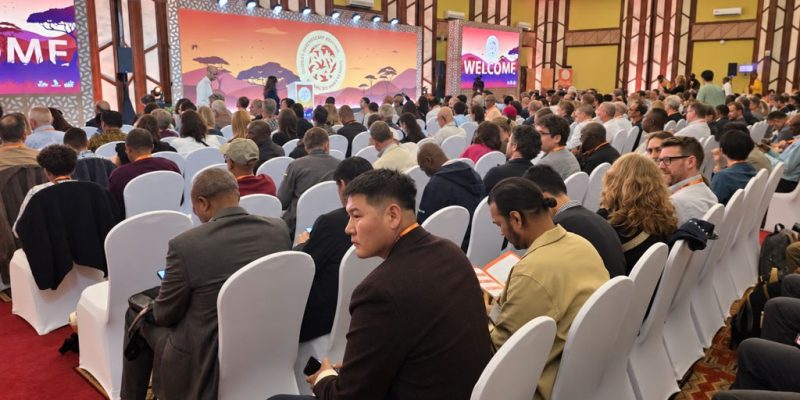
He said it in a post about the launch of BirdLife International’s State of the World’s Birds, which he had just signed a declaration in support of, in Nairobi, alongside governments and development banks announcing billions of dollars.
What the report found
BirdLife publishes State of the World’s Birds every four years. The 2026 edition, released on September 11 at the Global Flyways Summit in Nairobi, is the first to put migratory species and their flyways at the center.
The headline figure is that 45 percent of migratory bird species are in decline, and one in nine is threatened with extinction. Species that depend on marine habitats, forests and coastal wetlands are doing worst, and seabirds and shorebirds are among the most threatened groups of all.
The report’s framing argument is about geography rather than species. A flyway is not a line on a map. It is a chain of breeding grounds, stopover sites and non-breeding grounds spread across continents, and a bird needs all of it. Break one link and the whole chain is compromised, which is the case for conserving flyways as units rather than conserving sites, species or countries one at a time. That is what BirdLife’s Global Flyways Program, run across 125 partner organizations in 120 countries, exists to do.
“Migratory birds are sentinels, and their declines reveal growing pressure on the natural systems that sustain us,” said Dr. Stuart Butchart, BirdLife’s chief scientist and a senior editor of the report. “But the science is equally clear: conservation works, with co-ordinated action preventing extinctions and helping populations recover.”
The bird that is already gone
The report carries one fact that settles the argument about urgency. The Slender-billed Curlew, Numenius tenuirostris, was declared extinct in 2025.
The last record BirdLife gives for it is Morocco, February 1995. Thirty years of looking after that produced nothing, and the IUCN Red List now carries the species as Extinct. The Slender-billed Curlew was a migrant, which means it needed a breeding ground, a route and a wintering ground, and once a bird is gone there is no going back to establish which of the three failed it. That is the whole case for treating a flyway as one object rather than as a set of sites.
Six other migratory species have been confirmed or suspected lost in the last 150 years.
The declaration, and the money
The summit closed with the signing of the Nairobi Flyways Declaration, a commitment to coordinated action across borders and along whole migration routes.
“Migratory birds do not recognize borders. They connect Asia to Africa, the Arctic to the tropics,” said Her Imperial Highness Princess Takamado, honorary president of BirdLife International. “The Nairobi Flyways Declaration acknowledges this reality, that it needs international cooperation and coordination to keep migratory birds safe.”
The financial announcements around it were substantial. BirdLife reports that development banks have mobilized more than $6 billion in conservation finance since 2021, with the Asian Development Bank committing $3 billion over the next decade and the Development Bank of Latin America and the Caribbean $3 billion to $5 billion through 2050. The Global Environment Facility has approved $8.97 million in direct grants with $107 million in co-financing, covering nine million hectares of wetlands and benefiting 330,000 people.
Dr. Shah signed the declaration as the head of the BirdLife partner in Seychelles. Then he said what the numbers look like from where he is standing.
Why a country can be too rich to fund
Overseas development assistance is allocated by income category, and Seychelles, as a high-income small island state, is not eligible for it. The birds do not know that. A country can be classified out of the aid system while its conservation costs stay exactly where they were, and for a small island organization running long-term monitoring, that is a structural problem rather than a bad year.
“Without consistent financial backing, it becomes incredibly tough to sustain the monitoring, habitat management, and protection that conservation relies on,” Shah said. “The commitments made in Nairobi are crucial because they acknowledge that funding needs to align with the scale of the challenge we face.”
Monitoring is the thing that goes first when money goes. It produces no photograph and no opening ceremony, and it is the only reason anyone can say that 45 percent of migratory species are declining.
What Seychelles has to monitor
Seychelles does not sit on the main migratory flyways into Africa, and still takes migrants, and its islands and surrounding waters hold seabird populations numbering in the millions.
Seven seabird species breed on Cousin Island Special Reserve, which Nature Seychelles manages, with an estimated 300,000 seabirds using the island. Cousin is recognized as both an Important Bird Area and a Key Biodiversity Area, and the ongoing monitoring there tracks population trends and breeding success. Seabirds are useful indicators for a reason that is not sentimental: they feed at sea, so what happens to them is a reading of what is happening in the water around them.
The organization has been the BirdLife partner in Seychelles since 2002, on a relationship that goes back to 1968, when Cousin Island was bought to save the Seychelles Warbler. Every threatened endemic land bird in Seychelles was eventually brought back from that starting point. Acrocephalus sechellensis is now assessed as Near Threatened on the IUCN Red List, which is a long way up from where it was.
Which zoo paid for this
No zoo or aquarium funds Nature Seychelles, and this time we can say so from a complete list rather than from an absence.
The organization publishes its partners and funders in full. It runs to more than 50 entities and includes the Global Environment Facility, the European Union, the World Bank, USAID, UNDP, IUCN, WWF, BirdLife International, the Royal Society for the Protection of Birds, the Natural History Museum, the governments of Seychelles and Germany, the British Foreign Office, the Australian and United States embassies, Huawei, Seacology, the Jensen Foundation, the African Bird Club, several Seychelles island resorts and island companies, and a long run of Seychelles ministries and agencies.
There is not one zoological institution on it. We read the whole list this morning.
That is a finding rather than a gap. A chief executive saying publicly that he desperately needs funding for bird conservation, at an organization with a 58-year record of pulling endemic birds back from the edge, and no accredited zoo or aquarium anywhere among his supporters, is a straightforward description of where the zoological sector’s conservation money is not going. For scale on the sector, the Association of Zoos and Aquariums reports that its 235 accredited and certified facilities spent approximately $372.4 million on conservation across 139 countries in 2025. There is no published breakdown of the African or Indian Ocean share, and we are not going to estimate one.
The one Indian Ocean trace we have found held elsewhere: Odense Zoo funds the Seychelles Islands Foundation, which is a different organization managing different islands. We mention it because it is the only zoo money we have been able to verify anywhere in Seychelles, and because it did not come to this door.
We have written before about Nature Seychelles’ coral restoration work and the award it won for it, where the funding question came out the same way.
Sources: BirdLife International’s release on the report, read directly, and Nature Seychelles’ account of the summit, published September 16, 2026. Both read on October 5. The quotations from Dr. Butchart and Princess Takamado appear in both and are given here as BirdLife published them.
Quick answers
- What does the 2026 State of the World's Birds report say?
That 45 percent of migratory bird species are in decline and one in nine is threatened with extinction. Species dependent on marine habitats, forests and coastal wetlands are faring worst, and seabirds and shorebirds are among the most threatened groups. BirdLife International publishes the report every four years and this is the first edition centered on migratory species and their flyways.
- What is the Nairobi Flyways Declaration?
A commitment to coordinated action across borders and along whole migration routes, signed at the close of the Global Flyways Summit in Nairobi in September 2026 by governments, scientists, conservation organizations and financial institutions. Dr. Nirmal Shah signed it for Nature Seychelles.
- Why is Nature Seychelles short of money?
Seychelles is classified as a high-income country and is therefore not eligible for overseas development assistance, which is allocated by income category. Its conservation costs are unchanged. Dr. Shah said the organization is facing a financial crunch not experienced previously and desperately needs funding for bird conservation.
- What happened to the Slender-billed Curlew?
It was declared extinct in 2025, having last been recorded in Morocco in February 1995. The IUCN Red List now carries Numenius tenuirostris as Extinct. BirdLife reports six other migratory species confirmed or suspected lost in the last 150 years.
- What is on Cousin Island?
Seven breeding seabird species and an estimated 300,000 seabirds using the island, which Nature Seychelles manages as a Special Reserve. It is recognized as both an Important Bird Area and a Key Biodiversity Area. Cousin was bought in 1968 to save the Seychelles Warbler, now assessed as Near Threatened.
- How much money was announced at the summit?
BirdLife reports development banks have mobilized more than $6 billion in conservation finance since 2021, with the Asian Development Bank committing $3 billion over the next decade and the Development Bank of Latin America and the Caribbean $3 billion to $5 billion through 2050. The Global Environment Facility has approved $8.97 million in direct grants with $107 million in co-financing.