
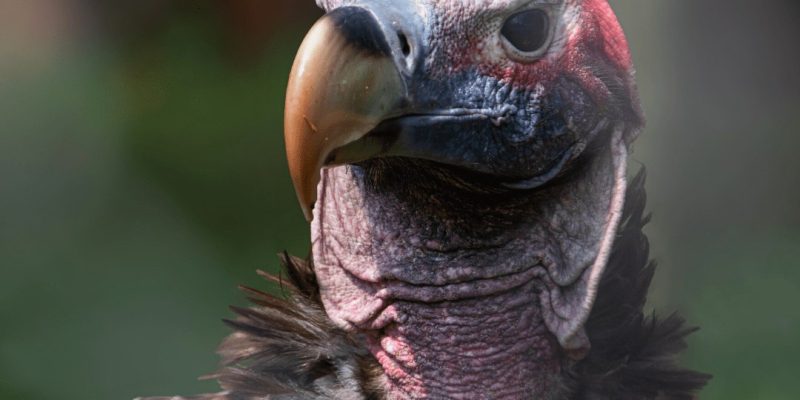
A lappet-faced vulture chick hatched at VulPro’s breeding facility on Heritage Day, September 24, 2025. It was the first the organization had ever produced, and the funders it thanked include two zoos.
VulPro named them in its own announcement: alongside Shamwari Private Game Reserve and a list of trusts and individual donors, Cincinnati Zoo and Zoo Zlín in the Czech Republic.
Why a first is a big deal here
Lappet-faced vultures are notoriously difficult to breed in captivity. VulPro says only a handful of facilities worldwide have managed fertile eggs producing captive-bred offspring.
“Lappet-faced Vultures are among Africa’s most endangered raptors, and their breeding challenges make every success story vital. These magnificent birds are extremely anxious and sensitive creatures that take considerably longer to form pairs than other vulture species, making Vulpro’s achievement all the more remarkable.”
Kerri Wolter, CEO, VulPro
South Africa has around 180 breeding pairs left in the wild.
This one is not going back
VulPro normally releases what it breeds. Not this chick. It stays in the breeding program to build what the organization calls a genetically diverse assurance population.
That is a specific and slightly grim decision. An assurance population is the copy you keep in case the original does not make it, and choosing to retain your first-ever chick of a species means judging the wild situation bad enough that another breeder is worth more than another wild bird.
VulPro then did something worth noticing: it publicly called for coordinated work with organizations worldwide holding lappet-faced vultures, to establish a managed captive population. That is an appeal addressed, in practice, to the zoo community.
One correction to the record
VulPro’s headline calls the species critically endangered. The IUCN lists the lappet-faced vulture as Endangered, uplifted from Vulnerable in 2015, with roughly 5,700 mature individuals globally. VulPro’s own November 2024 article gets it right, noting the lappet-faced is the exception among the vultures it works with.
We default to the assessment where a category is in question. It does not change the picture much: Endangered and falling, in a group of birds that has collapsed faster than almost anything else in Africa.
The move that made it possible
In November 2024 VulPro relocated 160 Cape and African white-backed vultures 1,042km from Hartebeespoort to Shamwari in the Eastern Cape, the largest vulture relocation ever undertaken. Fifty people, eighteen hours, all 160 birds loaded in three.
“To put it in perspective, in conservation terms I consider this as significant as relocating 160 rhino.”
Joe Cloete, CEO, Shamwari
Worth noting for accuracy: the backers VulPro names for the relocation itself were logistics, NGO and university, not zoos. The zoo money is attached to the captive breeding program specifically, which is where the chick came from.
Cincinnati also turns up on SANCCOB’s supporter wall, which is a fair illustration of how few institutions carry how much of this.
Sources: VulPro; IUCN Red List.