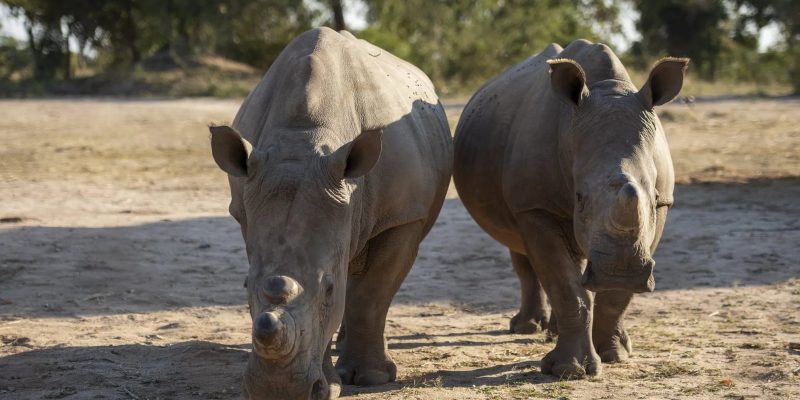
Two orphaned white rhino calves reached the Hoedspruit Endangered Species Centre within six months of each other in 2014. Gertjie arrived in May at about three months old. Matimba followed in November at around a month old, weighing roughly 60 kilograms. Poachers had killed both of their mothers. Five years later the two bulls were released together onto a reserve with secure fencing and an anti-poaching unit, and they have since done the one thing that shows the exercise worked: they separated.
That detail sits near the start of a piece the Limpopo center published on November 17 setting out what rewilding a rhino actually involves. Adult white rhino bulls spend much of their lives apart, so two animals hand-reared alongside each other who are now seen on opposite sides of the same reserve, in different crashes, are behaving as wild rhinos rather than as a bonded pair of orphans. A crash is the term for a group of rhinos, and the center uses it.
What the center says it can and cannot release
Nearly every rhino that arrives can go back, by the center’s account. The exceptions are animals with permanent physical injuries or conditions such as blindness, and the center notes that even a blind rhino in good condition has been found living wild. Age is not a barrier in either direction: orphans that arrived at a day old have been released successfully.
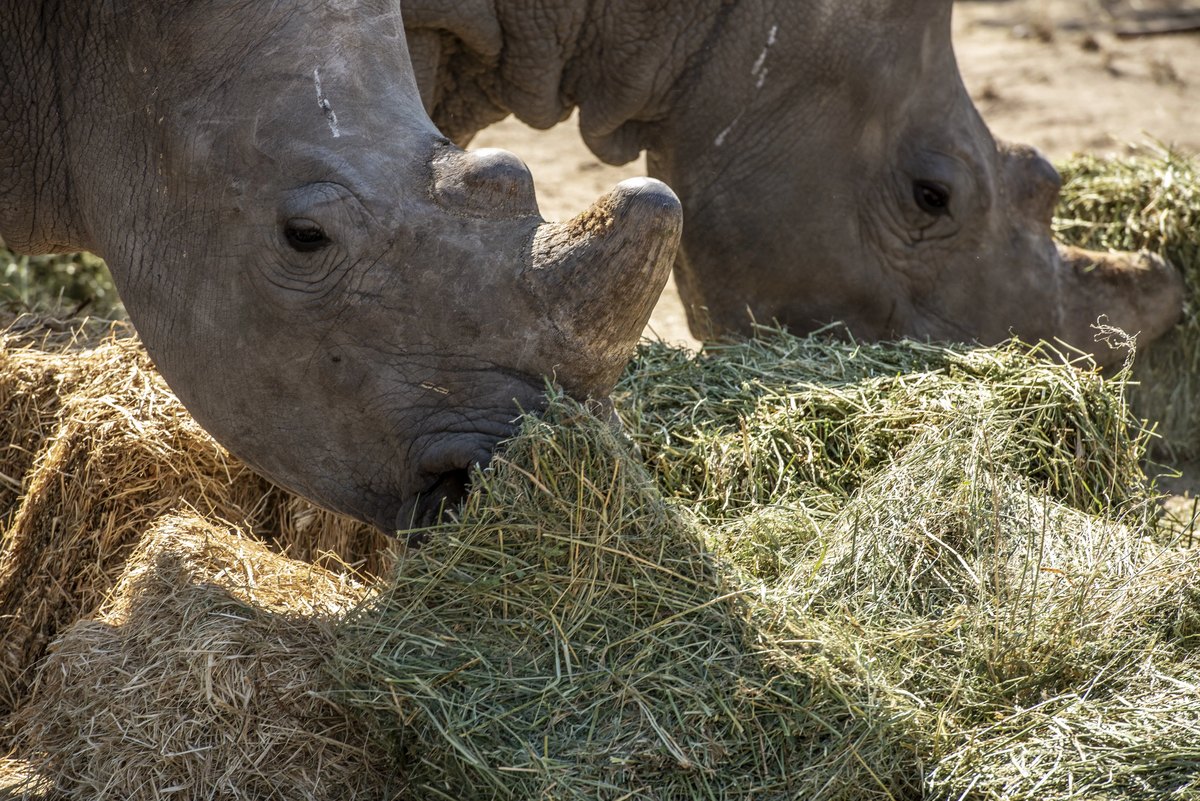
Rewilding is the center’s word for preparing an animal to live independently of people, and it describes it as the hardest part of the work to get right. Calves are hand-reared to an age that suits the individual, then moved to rewilding camps where staff deliberately step back and watch how each animal copes without regular human contact.
Timing carries as much weight as care. Young rhinos in the wild usually leave their mothers at around three to four years old, then join another crash or find others of their own age and begin working up the hierarchy. Releasing at that age, once the animal no longer depends on people, lets it enter the same cycle rather than arriving as an oddity.
Two survivors, and what the veterinary record looks like
Not every arrival starts at the rewilding camp. Poachers attacked Philippa’s mother in January 2016 and she did not survive. Philippa, then two and a half, survived with her horn removed and a deep facial wound. The wildlife veterinarians Liezel Steinman and Peter Rogers treated her for seven months, and the orthotist Brad Kidd made a custom protective cover to keep the wound clean while it healed.
Ike’s case began in Pilanesberg National Park, where he was found in 2015 with his horns removed and a wound across his back. The Saving the Survivors team treated him for 14 months before he came to Hoedspruit in September 2016. Philippa and Ike were released together in August 2019, and Philippa has since had two calves on the reserve where she lives.
Fourteen months of veterinary care before an animal is even a candidate for rewilding is the number that reframes this work. The rescue is the part that gets photographed. The years afterward are the part that decides whether it counted.
The release is only half of it
The center makes a point that cuts against its own success stories, and it is the reason to take the rest seriously. Olivia arrived in 2016 at about four months old after poachers killed her mother. She was released in 2019. Poachers killed her in 2021.
The conclusion the center draws is about the destination rather than the rehabilitation: even the best preparation only succeeds when the land an animal goes to is protected. Which reserve receives a rhino, and what that reserve’s rangers can do, is part of the decision and not a separate question that someone else answers later.
The receiving reserve’s rhino management plan also decides whether an animal is dehorned before release, and sets out post-release monitoring. That ranges from weekly tracking and game-drive reports to telemetry, with a transmitter in the horn sending location data back. The center describes ongoing monitoring as an essential part of every release now, which is a change from an era when the truck leaving was the end of the file.
What is being built next
The center is adding a rhino management boma to support the rewilding camps: a central point where rhinos can be fed and checked on without having to live inside it. The camps give an animal an enclosed space to adjust to new ground and new routines before it steps out into open bush, and the boma is the handling and feeding end of that arrangement. The center is raising the money for it through a Giving Tuesday appeal on December 1, asking 110 supporters for 50 dollars each.
A note on the listing
The white rhinoceros, Ceratotherium simum, is listed as Near Threatened on the IUCN Red List, assessed in January 2020 and published that year, with 10,080 mature individuals and a decreasing population trend. The center states no category in this piece, so there is nothing to correct. Near Threatened reads mild against the subject matter, and that is worth saying plainly rather than skipping: the assessment carries a decreasing trend and lists hunting and trapping among the threats, and the species sits where it does partly because a century of protection worked before poaching pressure returned.
Which zoos or aquariums paid for this?
We looked, and we did not find one. The center states that it receives no government funding and generates its own revenue, with all income going back into the animal programs and the running of the center. The named fundraising structures around it are its own: the Wildlife Conservation Trust, established in 2015 to source funding for its conservation, research and education work, and US Friends of HESC, a 501(c)(3) set up by Allen and Heidi Roberts in 2006. Cheetah and animal adoptions generate operational money. None of that is zoo money.
The center does list zoological affiliations, and they are worth naming precisely because of what they are not. It records working relationships with the National Zoological Gardens of South Africa, the Ann van Dyk Cheetah Centre and the Pan-African Association of Zoos and Aquaria, alongside the Endangered Wildlife Trust, the World Wildlife Fund and the University of Pretoria. Those are described as affiliations and co-operation, formal and informal, not as funding of the rhino program. We are not going to turn an affiliation into a check.
For scale, the Association of Zoos and Aquariums reports that 235 accredited and certified facilities spent about 372.4 million dollars on conservation across 139 countries in 2025. No published breakdown isolates what share of that reached southern Africa, so we are not going to print one. What we can say is that this rhino program is not visibly inside it. We have reported the same empty result at Care for Wild, another South African rhino orphanage, and followed the opposite case at Sheldrick, where an orphaned black rhino’s first year was documented in full.
Quick answers
- What does rewilding a rhino mean?
The Hoedspruit Endangered Species Centre uses it for preparing an animal to live independently of people. Calves are hand-reared to an age that suits the individual, then moved to rewilding camps where staff step back and watch how each one copes without regular human contact.
- At what age is a rehabilitated rhino released?
The centre aims for around three to four years old, because that is when young rhinos in the wild usually leave their mothers and join another crash or find others of their own age. Orphans that arrived at a day old have been released successfully.
- Which rhinos does the centre name?
Gertjie and Matimba, two orphaned bulls who arrived in 2014 and were released together in mid-2019; Philippa and Ike, both poaching survivors, released together in August 2019; and Olivia, released in 2019 and killed by poachers in 2021.
- How threatened is the white rhinoceros?
The IUCN Red List assessed Ceratotherium simum as Near Threatened in January 2020, with 10,080 mature individuals and a decreasing population trend.