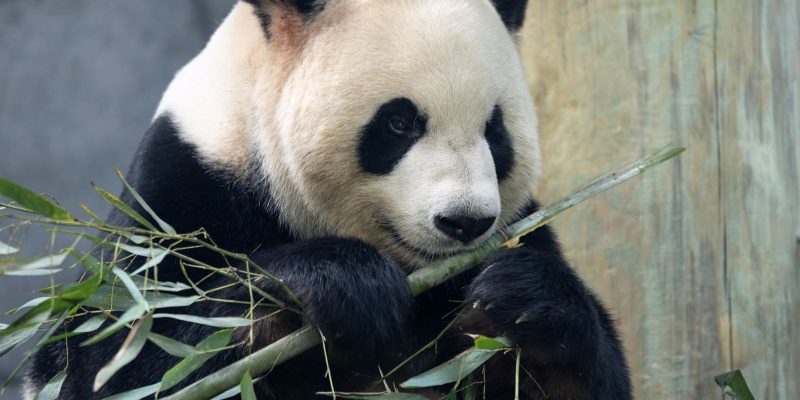
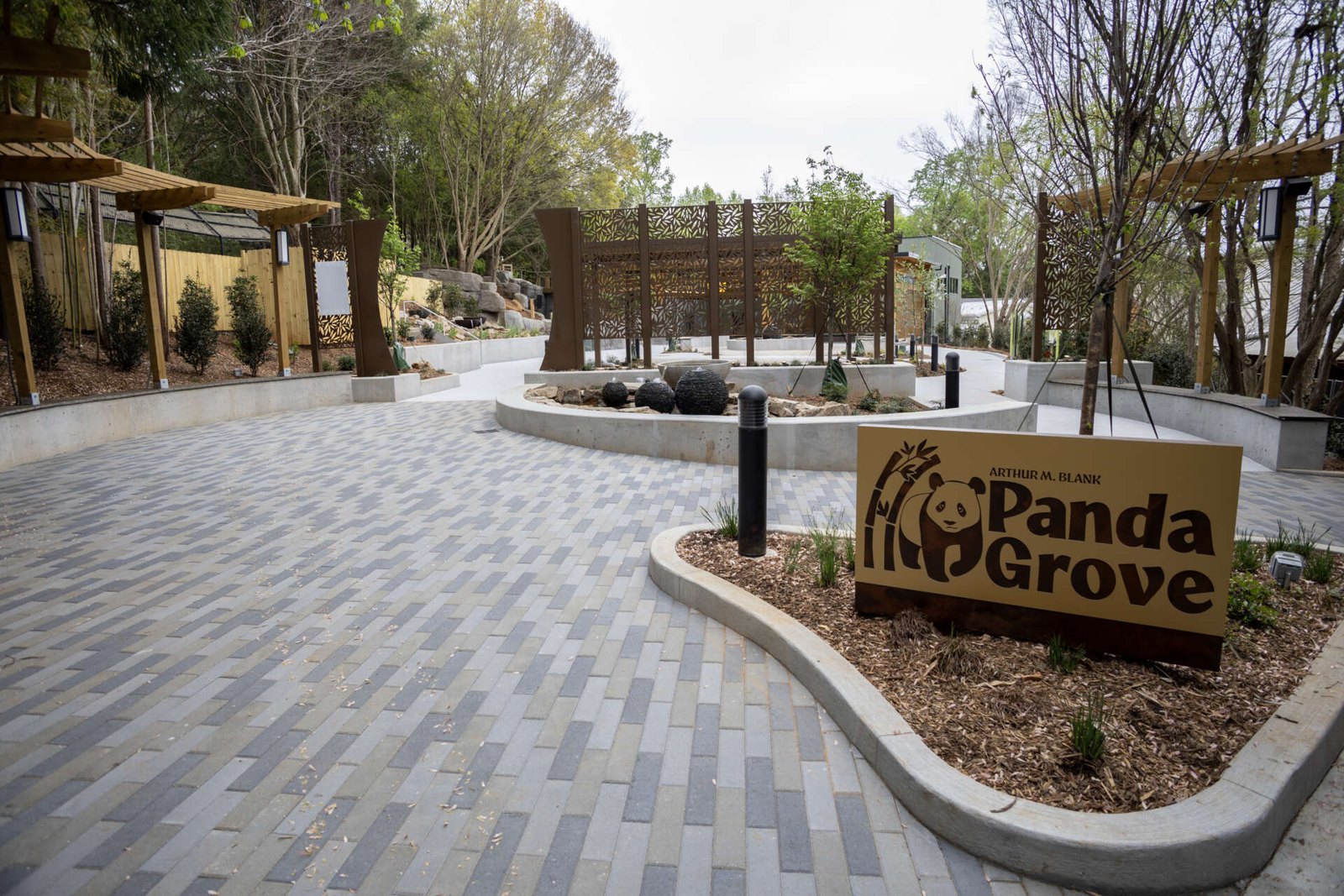
Zoo Atlanta has a date. Arthur M. Blank Panda Grove, the rebuilt giant panda complex that cost $6 million and has been standing finished and quiet while its two residents cleared quarantine, opens to the public on Friday, November 6, 2026. Ping Ping and Fu Shuang go on view that day.
The zoo announced the date and the name of the habitat on October 6. Both bears landed in Atlanta on September 27 and went straight into a biosecure holding area for a routine quarantine of about a month, which is why the grove has been sitting there with nobody in it.
What the $6 million bought
The useful way to read a renovation budget is to ask which parts of it the animals will actually touch. In this case, most of it.
The dayrooms, the indoor spaces where a panda spends the hours it is not outside, have been expanded and fitted with new climbing structures and a pool in each. The outdoor habitats got new climbing structures too. A panda is a bear that climbs, and an adult that can get itself up off the ground and sit in a structure is doing something it would do in a Sichuan forest. A pool indoors matters for the same reason: it is a second thing to do on a day when the weather keeps everyone inside.
The rest went on the part guests walk through. The complex has been redesigned around water features planted with aquatic flora and a sculpture the zoo describes as a statement about the panda’s role as a global ambassador. The money came as a grant from the Robert W. Woodruff Foundation.
The name is the older thread. Arthur Blank has supported the zoo’s panda program since 1999, when Lun Lun and Yang Yang arrived, and the first habitat carried his name as the Arthur M. Blank Family Foundation Giant Panda Conservation Center. The rebuild carries it again, shortened.
Why Atlanta has pandas again at all
Zoo Atlanta went almost two years without them. The original loan agreement ended and the last of the previous pandas went back to China, and in February 2025 the zoo began design work on the complex with no agreement in hand and nothing signed. That is an unusual order of operations: build first, in the hope of a partner.
The partner arrived in April 2026, when Zoo Atlanta and the China Wildlife Conservation Association initiated a new International Cooperative Research Agreement on Giant Panda Conservation naming Ping Ping and Fu Shuang. Both were born at the Chengdu Research Base of Giant Panda Breeding. The zoo is now one of three in the United States that holds the species, and the only one in the Southeast.
“This is a momentous occasion in Zoo Atlanta history,” said Raymond B. King, the zoo’s president and CEO. “Members and guests who recall the original giant panda habitat will know immediately upon entry that they are in for an entirely new experience.”
Where the species actually stands
The giant panda, Ailuropoda melanoleuca, is listed as Vulnerable on the IUCN Red List under criteria C2a(i) and D1, assessed on April 11, 2016 and published that year with an errata version in 2017. Two things in that entry are worth separating, because they get mixed together constantly.
The first is the direction of travel. The assessment records the population trend as increasing, which is a rare line to read on a Red List page and the reason the species moved off Endangered in 2016.
The second is the number. The Red List gives 500 to 1,000 mature individuals, and mature individuals is a narrower count than total population: it means animals capable of reproducing, not every panda in the forest. A larger figure quoted elsewhere is not necessarily in conflict with it, it is usually counting something else. The assessment is also a decade old now, which is worth saying plainly rather than treating a 2016 document as a bulletin from this morning.
Going on November 6
The zoo has said it will open late that Friday and has pointed guests at its own site for the timing, so check before you drive. Members and anyone who remembers the first habitat are the audience the zoo is openly playing to, and the reasonable expectation for a debut day at a panda habitat in a major city is a crowd.
What is waiting is two young bears from Chengdu in a complex that was built for them before anyone knew their names, with a pool in each dayroom and something to climb in every space they use.
Quick answers
- When does Zoo Atlanta's new panda habitat open?
Friday, November 6, 2026. Arthur M. Blank Panda Grove opens to the public that day and the giant pandas Ping Ping and Fu Shuang go on view. The zoo has said it will have a delayed opening that morning and has asked guests to check zooatlanta.org for the timing.
- What is new in the rebuilt habitat?
The indoor dayrooms were expanded and fitted with new climbing structures and a pool in each. The outdoor habitats also got new climbing structures. The complex was redesigned around water features planted with aquatic flora and a sculpture about the panda's role as a global ambassador.
- What did it cost and who paid for it?
$6 million, funded by a grant from the Robert W. Woodruff Foundation. The habitat is named for Arthur Blank, whose support of the zoo's panda program dates to 1999 and the arrival of Lun Lun and Yang Yang.
- Where did Ping Ping and Fu Shuang come from?
Both were born at the Chengdu Research Base of Giant Panda Breeding in China and arrived in Atlanta on September 27, 2026 under a new International Cooperative Research Agreement on Giant Panda Conservation between Zoo Atlanta and the China Wildlife Conservation Association.
- How many United States zoos have giant pandas?
Three. Zoo Atlanta is one of them and is the only zoological organization in the Southeast that holds the species.
- Is the giant panda still endangered?
The IUCN Red List lists Ailuropoda melanoleuca as Vulnerable under criteria C2a(i) and D1, assessed on April 11, 2016 and published that year with an errata version in 2017. The assessment records the population trend as increasing and gives 500 to 1,000 mature individuals, which counts breeding-age animals rather than every panda.