
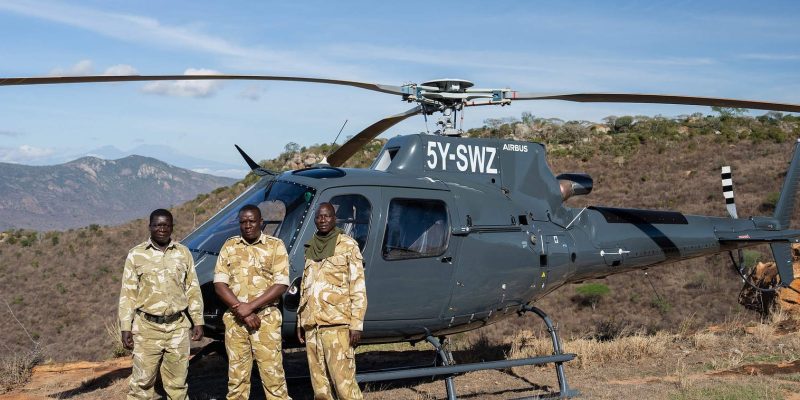
A bushfire broke out in the Maktau area of Kenya on September 13 and could not be contained while it was still small. Strong winds pushed it through roughly 15,700 acres before it was done. For several days the Sheldrick Wildlife Trust’s fixed-wing aircraft flew over it doing the thing an aircraft is uniquely good at: telling the people on the ground where the fire actually was.
That is the defining entry in the Trust’s Aerial Unit report for September, published October 31. Across the month the unit flew 241 hours and covered 32,985 kilometers.
Why September is the dangerous month
For most of September, Tsavo was in the late-season grip of the dry season: parched open country, with wildlife and livestock alike pressed in around the last permanent water. The Trust describes this as traditionally the most dangerous time of year for fire.
The reason is partly human. Fire season peaks in the weeks before the rains, when pastoralists burn in the expectation of fresh green shoots for their livestock, and in some cases because fire is believed to help call the rains. It is also the windiest part of the year, so anything that catches burns faster and harder.
At Maktau the aircraft mapped the fire’s extent over several days, directed ground teams, and put a company commander down at Maktau to coordinate the response from there. Mapping is the unmarked half of firefighting: a fire that has been burning on and off for days across thousands of acres does not have an obvious edge from the ground.
Two rhino operations, well outside Tsavo
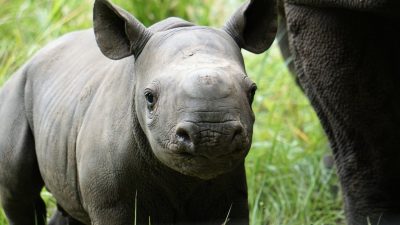
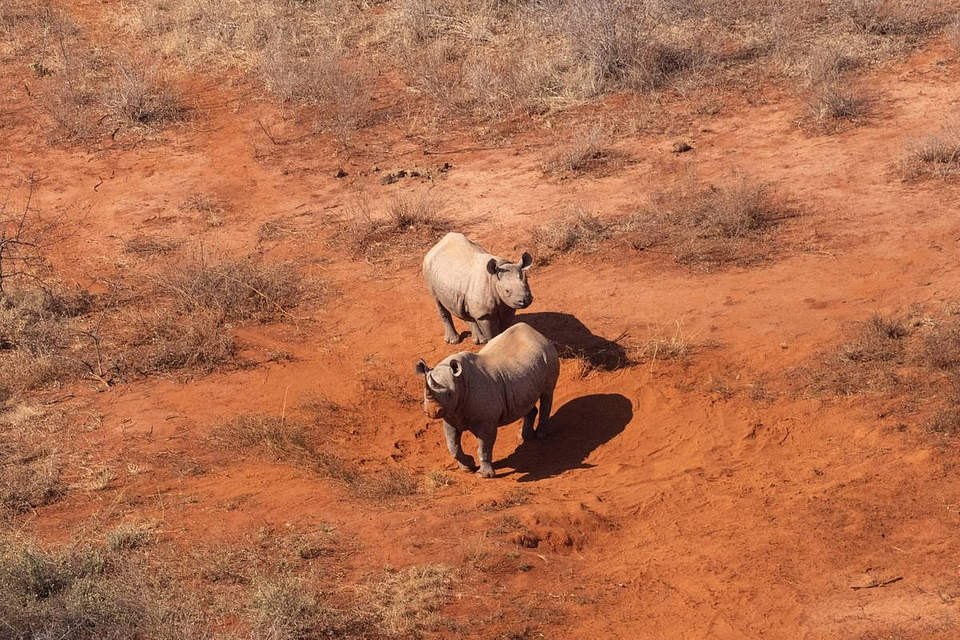
On September 6 the helicopter and the veterinary team worked a long way from home. At Meru National Park they assisted in darting and capturing two white rhino cows, which were translocated to El Karama in Laikipia. From Meru the team carried on to Nairobi National Park to treat an injured white rhino cow hurt in a confrontation with a bull, the second injury she had taken from the same animal.
Veterinary work inside Tsavo ran all month and most of it involved snares. A snared zebra was treated at Kipini. A snared wildebeest with a cable around its neck was treated in the Nasaru area of the northern Chyulu and given a very good prognosis. A snared giraffe on Kari Ranch was found and treated, but the wound was severe and the animal’s condition too poor, and it could not stand afterward. Two bull elephants were moved: a fence-breaker from Kamboyo to Tsavo East, and a problem bull at Komboyo and Mangalete.
A zebra foal, and a calf in a sewage tank
An orphaned zebra was rescued in the Shumbaland area on September 22. On September 25, in what the Trust calls one of the more unusual callouts of the month, a baby elephant fell into a sewage tank at Kilaguni and was recovered safely.
Human-elephant conflict needed helicopter responses throughout, around Gazi, Kanziku, Kamunyu and Kilalinda among other places, and the hardest cases were the persistent ones. A family herd of eight elephants outside the park at Kilalinda refused to be driven back through the community fence by two helicopters and ground vehicles, the matriarch charging the aircraft and the vehicles rather than retreating. The Trust’s own reading is that cases like that increasingly point toward mass capture or translocation as the only workable answer, which is a notable thing for an organization that flies helicopters at the problem to put in writing.
Kulalu Ranch
Anti-poaching operations on Kulalu Ranch ran through the middle of the month. On the night of September 15, bushmeat teams and the drone unit detained sixteen people found trespassing in a protected area. All sixteen were searched the next morning; eight were carrying hunting equipment and eight were released. The arrests were made on the cutlines leading toward Tsavo East, and two charcoal camps were destroyed. The operation continued the following day with further camps raided and recoveries handed to the Agricultural Development Corporation and the General Service Unit.
The Trust describes the Kulalu and Galana landscape as saturated with charcoal and bushmeat activity. The eight-of-sixteen figure is worth noticing for what it says about the method: a night operation that detains people on a cutline and then releases half of them by morning is doing something more discriminating than a sweep.
Then the rains came
In the final week the landscape changed. Rain fell widely across the northern area, around 50mm in places. Dams that had been dry for months started holding water, the first green appeared, and wildlife and livestock began moving away from the rivers and back out across the plains. The fire risk went with it.
Who is paying for this
We looked for an accredited zoo or aquarium behind the Sheldrick Wildlife Trust’s aerial operations and did not find one. The Trust is funded through its own fundraising, its fostering program and institutional grants, and no zoological institution appears as a funder of the Aerial Unit. That is a finding rather than a gap, and in this case there is a reason behind it worth stating plainly: the Trust publishes a position opposing the capture of infant elephants for captivity, which puts a real distance between it and parts of the zoo world. Readers should know that when we report its work.
For comparison, the Association of Zoos and Aquariums reports that 235 accredited and certified facilities spent roughly $372.4 million on conservation across 139 countries in 2025. No published breakdown isolates what any part of Africa received, and none of it that we can trace reaches this unit. The aircraft fly anyway.
We covered the same unit’s August report, in which a fixed-wing crew finally resolved a one-eyed bull elephant that had resisted every previous attempt to move him, in The Arrowhead Was Lodged in the Bull’s Eye Socket.
Quick answers
- How much did the Aerial Unit fly in September 2026?
241 hours, covering 32,985 kilometers.
- How big was the Maktau fire?
It broke out on 13 September and burned on and off for several days, consuming roughly 15,700 acres. Strong winds meant it could not be contained while it was still small. The fixed-wing aircraft mapped its extent, directed ground teams and placed a company commander at Maktau to coordinate.
- Why is September the worst month for fire in Tsavo?
It is the end of the dry season, when wildlife and livestock are pressed in around the last permanent water, and it is the windiest part of the year. Pastoralists also burn in the weeks before the rains in the expectation of fresh green shoots for their livestock.
- What rhino work did the unit support?
On 6 September the helicopter and veterinary team helped dart and capture two white rhino cows at Meru National Park for translocation to El Karama in Laikipia, then continued to Nairobi National Park to treat an injured white rhino cow, hurt for the second time by the same bull.
- What happened at Kulalu Ranch?
A coordinated night operation by the bushmeat teams and drone unit detained sixteen people trespassing in a protected area on 15 September. All sixteen were searched the next morning; eight were found with hunting equipment and eight were released. Two charcoal camps were destroyed, with further camps raided the following day.
- Which zoo or aquarium funds the Aerial Unit?
None that we could verify. The Trust is funded through its own fundraising, its fostering programme and institutional grants, and no zoological institution appears as a funder of the Aerial Unit. The Trust also publishes a position opposing the capture of infant elephants for captivity.