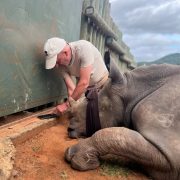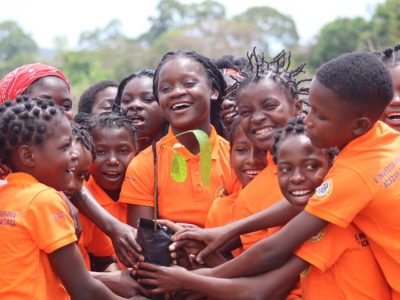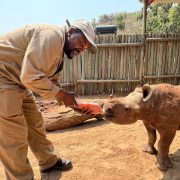
Care for Wild Rhino Sanctuary in Mpumalanga, South Africa is known for raising orphaned rhinos. Since April it has also had trained facilitators inside four neighboring primary schools every week, reaching more than 600 learners a week in the first phase of the rollout.
The sanctuary published an account of the program’s first eight months on October 15, 2026, covering January to August.
What the program actually is
Care for Wild is not writing its own curriculum. It delivers the Good Work Foundation’s Open Learning Academy, an existing South African digital learning model, inside schools that already exist, using facilitators the sanctuary trains and employs.
That training came first. In March the facilitators spent an intensive period with the Good Work Foundation in Hazyview, working on how to run a classroom that holds attention: approaches that put emotional readiness, participation and cognitive engagement at the center of the session rather than treating them as a preliminary to the real lesson.
By April the training had turned into a weekly presence at four schools: Sheba Primary, Fairview Primary, Sinqobile Primary and Louieville Combined Primary.
English and mathematics, and then more mathematics
From May to August the facilitators delivered structured English and mathematics support, and the progression is worth reading as a list because it shows the range inside a single program.
It started with sentence construction, phonics, basic calculations and telling the time. It moved on to reading comprehension, multiplication and division, fractions, unit conversion, tenses and ratios, and then to examination preparation.
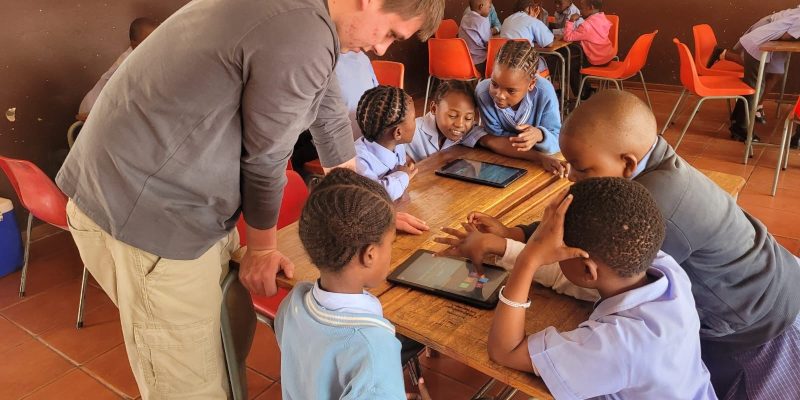
Holding a large classroom is its own problem, and the program is built around it. Learners work on digital tablets. Sessions are broken up with interactive activities, movement and what the sanctuary calls brain break sessions, and with play-based activities and creative learning days meant to build confidence rather than cover content.
The schools asked for something and got it
The detail that says most about how the program is run is a request that came the other way. The principal of Sheba Primary asked for additional support for Grade 7 learners, which was outside the phase the program was then working in. In August the facilitators expanded into the senior phase and worked with 57 Grade 7 learners on mathematics and examination preparation.
In the same month learners across all four schools wrote letters of appreciation to their mothers, grandmothers and sisters for Women’s Day.
Why a rhino sanctuary runs a schools program
The sanctuary’s own answer is short and does not pretend the two things are the same work. Conservation, it argues, does not exist in isolation from the people and communities around a protected landscape, and building opportunity and educational capacity in the next generation is part of the social foundation a resilient conservation landscape rests on.
It is an argument made by a lot of field organizations and it is usually made without numbers attached. This one has four school names, a learner count, a month-by-month account of what was taught, and a request from a principal that changed the plan.
The rhino work continues alongside it. Satara, the first Kruger orphan the sanctuary took in, back in 2014, gave birth to her first wild-born calf this month.
Which zoos pay for this
We looked for an accredited zoo or aquarium funding Care for Wild Rhino Sanctuary and did not find one.
That is not a criticism of the sanctuary and it is not a hole in the reporting. It is the finding. Care for Wild’s named partner in this program is the Good Work Foundation, a South African education non-profit rather than a zoological institution, and the sanctuary’s own pages point readers at individual donations, rhino adoptions, corporate and foundation giving and its lodge rather than at any zoo.
For scale on the other side of that question: the Association of Zoos and Aquariums reports that in 2025 its 235 accredited and certified facilities spent approximately 372.4 million dollars on conservation across 139 countries. No published breakdown isolates how much of that reached African field organizations, so we are not going to print a figure for it. What we can say is which specific organizations we have been able to trace to a zoo and which we have not, one story at a time, and this is one of the ones we have not.
The sanctuary’s account of the program is on the Care for Wild site.
Quick answers
- What is Care for Wild’s conservation education program?
It delivers the Good Work Foundation’s Open Learning Academy inside four primary schools neighboring the sanctuary, using facilitators Care for Wild trains and employs. More than 600 learners received direct support each week during the initial rollout.
- Which schools does it reach?
Sheba Primary, Fairview Primary, Sinqobile Primary and Louieville Combined Primary, all neighboring the sanctuary in Mpumalanga, South Africa.
- What do the learners study?
Structured English and mathematics, progressing from sentence construction, phonics, basic calculations and telling the time to reading comprehension, multiplication and division, fractions, unit conversion, tenses, ratios and examination preparation.
- When did the program start?
The facilitators trained with the Good Work Foundation in Hazyview in March 2026, and the weekly presence across the four schools began in April.
- Did the program change after it started?
Yes. The principal of Sheba Primary asked for additional support for Grade 7 learners, and in August the facilitators expanded into the senior phase, working with 57 Grade 7 learners on mathematics and examination preparation.
- Which zoos fund Care for Wild?
We looked for an accredited zoo or aquarium funding Care for Wild Rhino Sanctuary and did not find one. Its named partner in this program is the Good Work Foundation, a South African education non-profit rather than a zoological institution.