
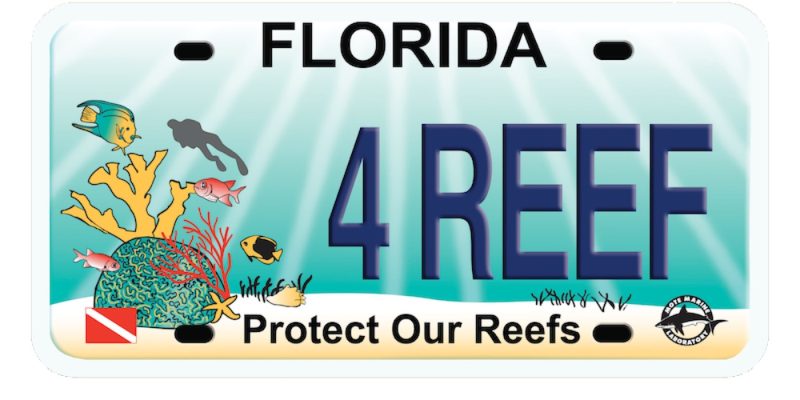
Mote Marine Laboratory and Aquarium has awarded more than $365,000 to coral reef projects through the 2026 round of its Protect Our Reefs License Plate Grant Program, the fund built entirely from Florida drivers buying a specialty license plate.
A license plate that pays for science
Florida motorists who choose the “Protect Our Reefs” plate send the proceeds to Mote, which manages the program and distributes the money as research, restoration, education and outreach grants. Over more than 20 years it has handed out over $8 million across more than 350 coral-focused projects, run by dozens of Florida-based organizations, and has connected Mote with more than 100 institutions worldwide.
“We are profoundly grateful to every Florida driver who chooses to support Mote’s coral reef research and restoration efforts by purchasing a Protect Our Reefs license plate,” said Dr. Michael P. Crosby, president and CEO of Mote Marine Laboratory. “Together, we are making a tangible difference in restoring and conserving our state’s unparalleled marine beauty by safeguarding the health of our rainforests of the sea for generations to come.”
What the reef is worth
Florida’s Coral Reef runs more than 350 miles down the state’s coast and is the only barrier reef system in the continental United States. It buffers the shoreline against storm surge and supports more than 6,000 marine species.
The economics are documented. The National Oceanic and Atmospheric Administration puts the reef’s asset value at $8.5 billion, and credits it with $4.4 billion in local sales, $2 billion in income and 70,400 full- and part-time jobs.
Against that, coral cover has fallen sharply over the past four decades under a combination of ocean warming, acidification and disease.
Where the 2026 money went
The 2026 to 2027 recipients include Eckerd College, SCUBAnauts International and the Florida Fish and Wildlife Conservation Commission’s Fish and Wildlife Research Institute, with several projects run jointly between Mote and those partners.
The funded work is specific rather than general. One project tests whether body size and environmental conditioning change how Caribbean king crabs handle heat and how much they graze. Another tries to improve the survival of coral recruits, the newly settled young corals, by seeding them with freshly isolated cultures of algal symbionts, the single-celled algae that live inside coral tissue and feed the animal. A third looks at how ciliates, a group of single-celled organisms, affect coral propagation in nurseries. Other grants go to work on coral resilience.
Part of the money also goes to Mote’s own Florida Keys infrastructure, which visiting scientists use: water chemistry and coral reproduction labs, and tanks that let researchers dial pH and temperature to whatever future they need to test.
“By standing united in our commitment to coral reef conservation, we can combat the multifaceted threats that have plagued these vital ecosystems for decades,” said Kevin Claridge, vice president for sponsored research and coastal policy programs at Mote.
Part of a longer program
The grants sit alongside Mote’s own restoration research. ZooReviews has covered its work identifying disease-resistant mountainous star coral genotypes and its response to high water temperatures on the reef.
The full recipient list and program details are at Mote’s announcement.
Quick answers
- How does Florida's Protect Our Reefs license plate work?
Drivers who buy the specialty plate send the proceeds to Mote Marine Laboratory, which manages the fund and awards it as coral reef research, restoration, education and outreach grants.
- How much has the Protect Our Reefs program awarded?
More than $8 million over more than 20 years, across more than 350 coral-focused projects run by dozens of Florida-based organizations. The 2026 round awarded more than $365,000.
- Why does Florida's Coral Reef matter economically?
NOAA puts its asset value at $8.5 billion and credits it with $4.4 billion in local sales, $2 billion in income and 70,400 full- and part-time jobs.