
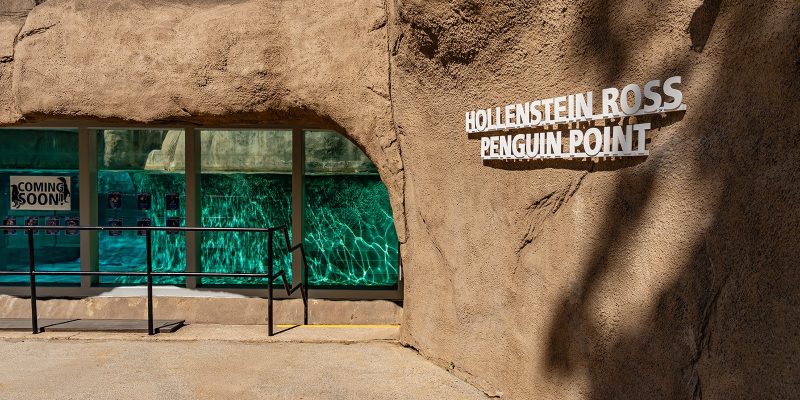
Philadelphia Zoo has a colony of Magellanic penguins for the first time in more than 75 years, and it built them a habitat with two pools, only one of which visitors can see.
The birds arrived at the upgraded Hollenstein Ross Penguin Point from other facilities accredited by the Association of Zoos and Aquariums, moved on the recommendation of the Species Survival Plan, the program that pairs animals across institutions for breeding.
Two pools, one visible
The outdoor habitat is the one guests experience: a rocky landscape the birds climb and jump across, a 200,000-gallon pool for swimming and diving, and nesting burrows built to support breeding.
The indoor habitat, which guests cannot see, has a 5,500-gallon pool of its own. The zoo is direct about why it exists. Penguins can be moved inside during severe weather, and the indoor space protects them from Highly Pathogenic Avian Influenza.
That second reason is the one worth pausing on. HPAI has moved through wild bird populations across North America in recent years, and zoos with outdoor bird collections have had to plan for it. Being able to bring an entire colony indoors, into a space with real water rather than a holding room, is the difference between managing an outbreak and losing birds to it. It is expensive, it is invisible to visitors, and it is the reason a habitat like this costs what it costs.
The species
Magellanic penguins live on the coastal grasslands near the southern tip of South America, in Chile, Argentina and Uruguay. They stand about two feet tall and reach 15 pounds. The IUCN classifies them as near threatened.
They are burrow nesters, which is why the burrows in the outdoor habitat are a design feature rather than decoration. A Magellanic penguin without somewhere to dig is a penguin that will not breed.
The colony
The zoo has introduced some of the birds by name. Hagrid, a 15-year-old male, has a reputation for stealing fish from the other penguins, though in his defense he is usually already swimming when his care team starts feeding. Pinkie, a one-year-old male, is curious and sometimes standoffish. Lola, a nine-year-old female nicknamed Lola Bean, likes meeting guests and likes attention from her keepers.
Guests can watch the colony dive in the outdoor pool and work out the new habitat as they settle in.
Quick answers
- Why does Philadelphia Zoo's penguin habitat have two pools?
The outdoor habitat at Hollenstein Ross Penguin Point has a 200,000-gallon pool that guests can see, and an indoor habitat guests cannot see has a 5,500-gallon pool of its own. The indoor space lets the birds be moved inside during severe weather and protects them from Highly Pathogenic Avian Influenza.
- How long has it been since Philadelphia Zoo had penguins?
This is its first colony of Magellanic penguins in more than 75 years.
- Where did the penguins come from?
Other facilities accredited by the Association of Zoos and Aquariums, moved on the recommendation of the Species Survival Plan, the program that pairs animals across institutions for breeding.