
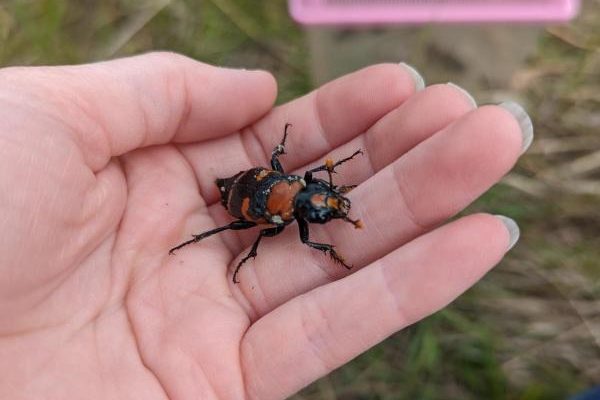
The American burying beetle is federally threatened, endangered in Ohio, and has been a focal conservation species at The Wilds for more than a decade. The Ohio Department of Natural Resources has been awarded another federal grant, and The Wilds will receive $77,915 over three years to keep the reintroduction program running.
An insect worth this much trouble
Burying beetles do something few insects do: they parent. A pair finds a small carcass, buries it, strips it, treats it with antimicrobial secretions to slow decay, and then stays with the larvae and feeds them. It is care of a kind usually associated with birds and mammals.
They also do the work their name describes, recycling carrion back into soil. The species once ranged across most of the eastern United States and collapsed to a handful of populations, for reasons still argued over: habitat fragmentation, changes in the carrion supply, competition from scavengers that thrive alongside people.
Who does what
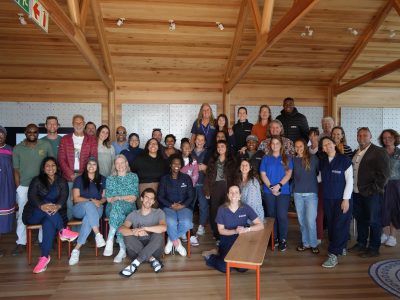
The Wilds runs the Ohio reintroduction with the U.S. Fish and Wildlife Service, the ODNR Division of Wildlife, the Nebraska Game and Parks Commission and the Cincinnati Zoo and Botanical Garden.
Nebraska matters because that is where the brood stock comes from. Staff from The Wilds and Cincinnati Zoo travel to the eastern Sandhills to collect wild beetles, which are then bred in captivity and released in Ohio.
Funding through the Cooperative Endangered Species Conservation Fund has supported two technicians, one at each institution, covering captive breeding, releases, trapping and research. The Wilds first received cooperative federal grant support for the work in May 2022, and support was later increased to cover breeding and release supplies and the Nebraska collection trips.
The question the new money answers
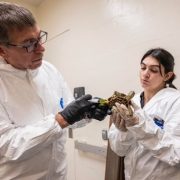
The most interesting line in the grant is the smallest. Part of the new funding pays for stable isotope research to determine whether beetles caught during trapping season were wild-born.
That is the question every reintroduction eventually has to answer, and most cannot. Releasing animals is measurable. Finding released animals later is measurable. Establishing that the animals you are now catching were born in the wild, rather than being the ones you put there, is the difference between a population being stocked and a population being restored.
Isotopes make that separable, because a beetle reared on captive diet carries a different chemical signature from one that fed in Ohio. It turns an assumption into a measurement.
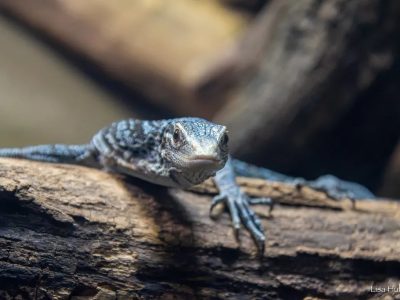
Reintroduction programs increasingly live or die on this kind of follow-up: Texas biologists found wild-born hatchlings from zoo-reared horned lizards, which was the first evidence that program was working.