
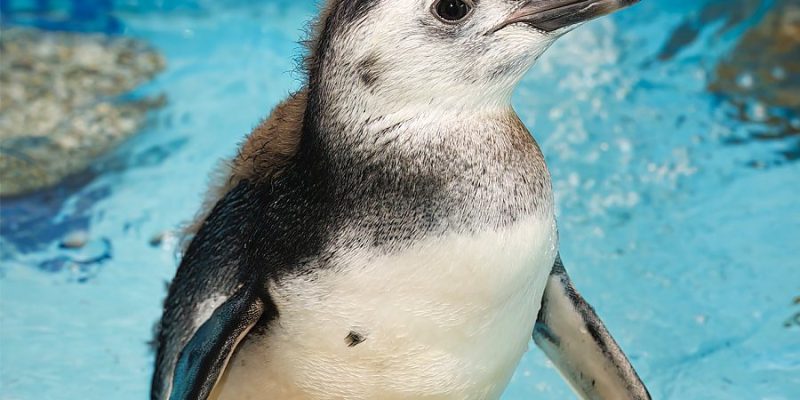
A Magellanic penguin chick named Ari has joined the flock at the Aquarium of the Pacific in Long Beach, and his parents are two penguins the aquarium itself rescued sixteen years ago.
Kate and Robbie
Ari’s parents, Kate and Robbie, stranded in Brazil in 2010. They were rescued and rehabilitated at the Aquarium of the Pacific, and they never left. They first paired for breeding in 2022.
“After four years, this is their first chick that has successfully been hatched and raised,” said Megan Smylie of the Aquarium of the Pacific. “We are thrilled to welcome the new baby, which hatched on May 9, and now introduce him to his new home.”
Four years of pairing before a chick is a reminder that a breeding recommendation is a beginning, not an outcome. The aquarium takes part in the AZA Species Survival Plan for Magellanic penguins, which manages genetic diversity across the population in accredited institutions.
Penguin work spans the network: SeaWorld moved the only emperor penguins in the Americas this year, and two Sedgwick County keepers built 200 nests for wild Humboldt penguins in Peru.
How a penguin chick grows up
Magellanic chicks stay with their parents for one to two months and reach adult length, twenty-four to thirty inches, by the end of it. They then move to a behind-the-scenes penguin nursery where they learn to swim and take part in feedings before joining the adults on exhibit.
In the wild the sequence is harsher and more interesting. Parents brood their chicks after hatching and feed them at one-to-three-day intervals depending on what the ocean is providing. Chicks stay on the nest anywhere from nine to seventeen weeks, and about ten days before they fledge, the parents simply stop feeding them. The hunger is what gets them into the water.
Seeing Ari
Ari and the rest of the flock are in the June Keyes Penguin Habitat. Magellanic penguins are a temperate species native to the coasts of Argentina and Chile, so this is not a cold-weather exhibit and the birds are active and visible.
If you cannot get to Long Beach, the aquarium runs webcams on the penguin habitat from its website. Worth a look for the specific pleasure of watching a young penguin work out what its feet are for.