
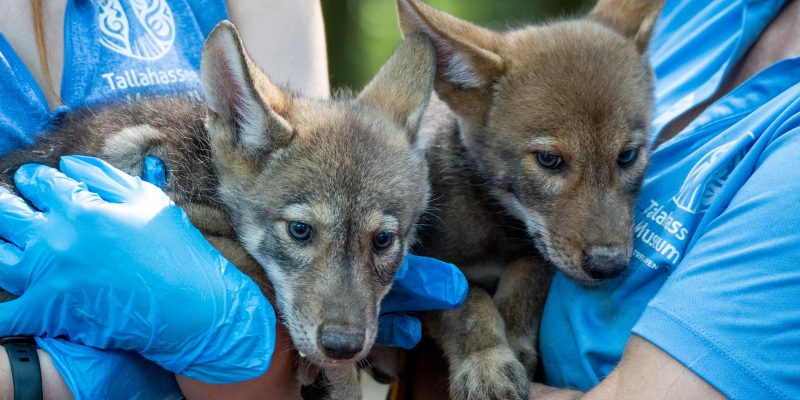
Two red wolf pups were born at the Tallahassee Museum in the early morning of April 26, 2024, one male and one female, to a four-year-old female named Arrow and a male named Rainier.
There are fewer than 250 red wolves on earth. It is the most endangered canid in the world, and every litter is counted.
A pack built at the museum
This is Arrow and Rainier’s first litter. Rainier came from the last litter born at the Tallahassee Museum, in 2017, which makes these pups a second generation on site.
It is the fourth red wolf litter the museum has produced since 1988.
The pups will not be visible for two to three months. Red wolf parents keep their young in the den box, the way they would in the wild, and the museum is deliberately not interfering with that. The animal department and the attending veterinary team have been watching growth and health through den cameras rather than handling.
Dr. Manuel of Forgotten Coast Animal Hospital examined the pups most recently and found them healthy and developing normally.
Why the museum keeps its distance
The Tallahassee Museum has been part of the Red Wolf Species Survival Plan, now the American Red Wolf SAFE project, since 1988. It was among the first sites in the country to work with the U.S. Fish and Wildlife Service on captive breeding for the species.
At that point there were fewer than 20 red wolves in the wild and the species had been declared biologically extinct in its natural range, the result of hunting and habitat loss.
The program’s goal is release, which shapes how the animals are managed. The museum minimizes human contact on purpose: a wolf that has learned to approach people is a wolf that cannot be put back into a landscape full of them. Keeping the pack structure intact matters for the same reason, since a released animal needs to know how to live in one.
Whether these two pups are ever candidates for release is a decision for the SAFE program, years from now. What the museum controls in the meantime is that they grow up as wolves.