
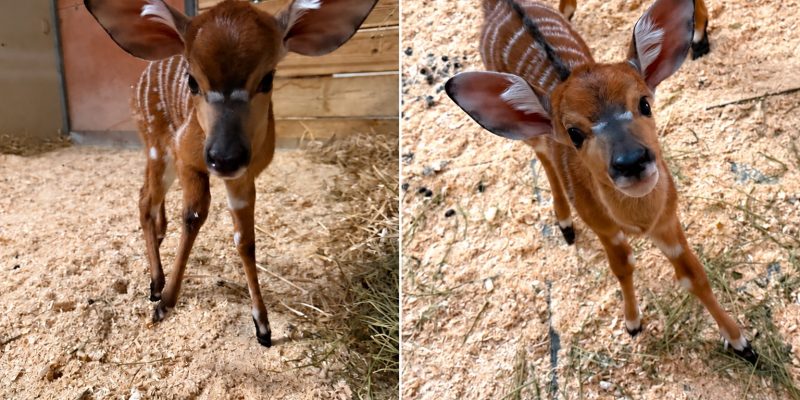
Como Park Zoo and Conservatory has two new nyala calves, born twenty days apart. A male, Hubert, arrived on October 3 weighing 13.6 pounds. A female followed on October 23 at 9.3 pounds. The second calf belongs to a two-year-old nyala named Meadow, and Meadow was herself born at Como to the mother of the first calf, which means the four-year-old female Stevie became a mother and a grandmother inside the same three weeks.
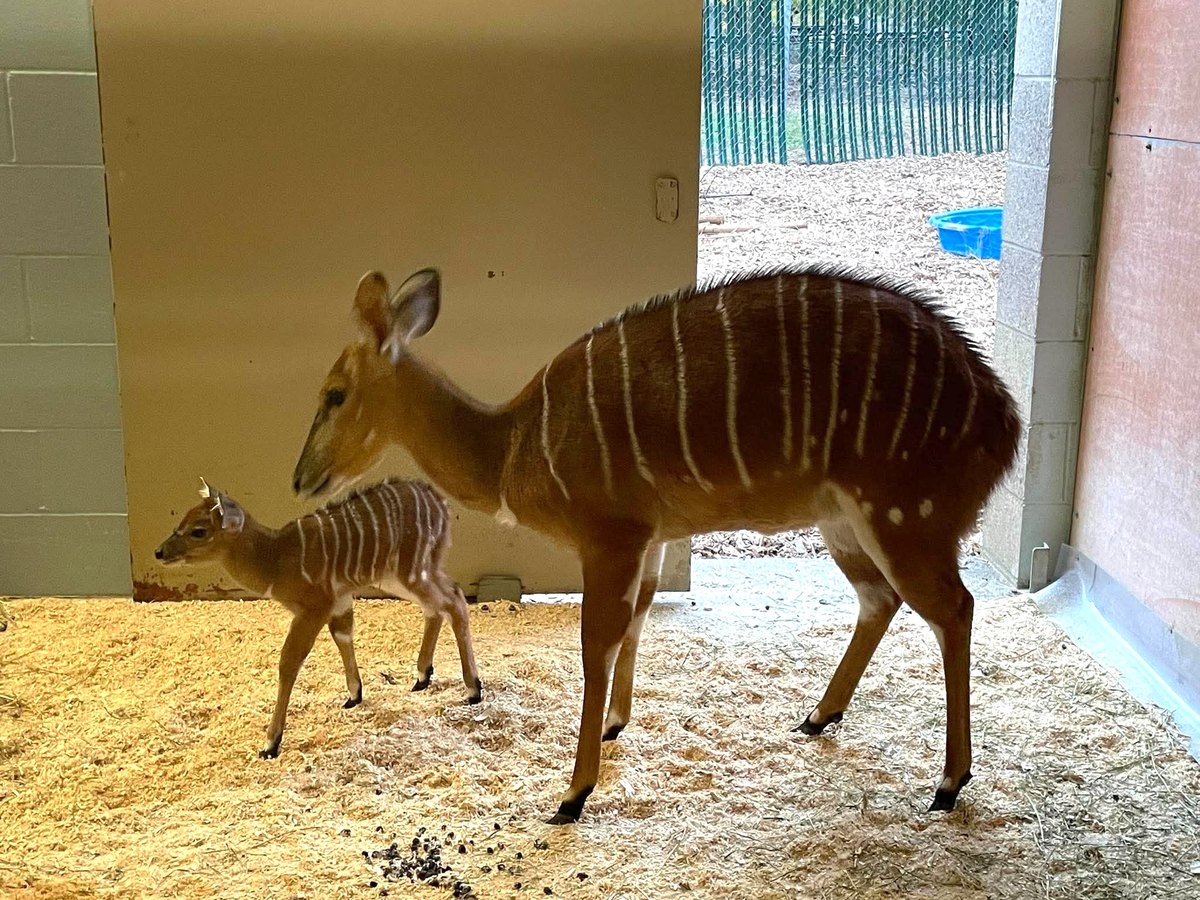
“Nyala calves are absolutely adorable, with their big ears and beautiful striped coats, and having two arrive so close together makes this an especially exciting time,” said Senior Zookeeper Jill Erzar. “Visitors may now catch a glimpse of Stevie and Hubert in their indoor habitat, while we’re giving Meadow and her little one more time to bond behind the scenes.”
Who are the parents?
Hubert is Stevie’s third calf. Stevie came to Como from Pittsburgh in 2023, and her keepers describe her as personable and especially fond of snacks from her care team. Meadow was born at Como to Stevie in January 2024, which makes this her first calf at two years old.
The father of both is Ollie, a seven-year-old male who arrived from Baton Rouge in December 2025 and became a first-time father with Hubert’s birth. Keepers describe him as shy around people but considerate of the females in his group.
Both births follow Species Survival Plan recommendations. An SSP is a breeding program run across Association of Zoos and Aquariums institutions that decides which individual animals should be paired, using studbook records to keep a population genetically diverse rather than letting it drift toward relatives breeding with relatives. It is why Ollie made the trip from Louisiana at all: the pairing was planned before he moved.
How did Hubert get his name?
By public vote, from a shortlist with a particular theme. Three Como zookeepers each put forward their grandfather’s name, and guests chose between them at Como Friends’ Como After Hours event on October 22. Hubert took it with 41.5 percent, ahead of LeRoy on 37.8 percent and Gary on 20.7 percent.
The female calf has no name yet. That decision goes to Como’s volunteers at their Volunteer Recognition event on November 5.
What is a nyala?
A spiral-horned antelope native to the woodland and thicket country of southern Africa. Females and calves wear chestnut coats marked with white stripes and spots, which is why both newborns look so sharply patterned. Males change as they mature, darkening to a heavier coat and growing the spiral horns the species is named for. A nyala pregnancy runs roughly 210 to 230 days, about seven months.
Where does the species stand?
The International Union for Conservation of Nature lists the nyala as Least Concern, which is exactly how Como describes it. The Red List’s 2016 assessment put the population at 20,000 to 27,500 mature individuals and the trend as stable. That is an unusually comfortable position for a large African mammal, and it is worth saying plainly rather than reaching for a threat that is not there.
When can you see them?
Stevie and Hubert already have access to their public indoor habitat, so a visit now may well turn up a very small nyala doing very little at high speed. Meadow and her daughter are still behind the scenes while they bond, and Como has said it will announce both her public debut and her name after the November 5 volunteer event.
Como Park Zoo and Conservatory announced both calves on October 26, and the IUCN Red List assessment for Tragelaphus angasii carries the listing and the population figure. We have followed Como’s other new arrivals before, in the zoo’s grey crowned crane chicks, and its construction work in the first phase of the Como Big Cats project.
Quick answers
- How many nyala calves were born at Como Park Zoo?
Two, twenty days apart. A male named Hubert was born on October 3 weighing 13.6 pounds, and a female calf followed on October 23 weighing 9.3 pounds.
- Who are the calves’ parents?
Hubert was born to a four-year-old female named Stevie, his mother’s third calf. The female calf was born to Meadow, a two-year-old first-time mother who was herself born at Como to Stevie in January 2024. A seven-year-old male named Ollie, who arrived from Baton Rouge in December 2025, is the father of both.
- Why is Stevie both a mother and a grandmother?
Because her own calf Hubert was born on October 3 and her daughter Meadow’s calf was born on October 23. The two events fell twenty days apart in the same month.
- How did Hubert get his name?
By public vote. Three Como zookeepers each submitted their grandfather’s name, and guests voted at Como Friends’ Como After Hours event on October 22. Hubert won with 41.5 percent, ahead of LeRoy on 37.8 percent and Gary on 20.7 percent.
- Is the nyala an endangered species?
No. The IUCN Red List classifies the nyala as Least Concern, and its 2016 assessment put the population at 20,000 to 27,500 mature individuals with a stable trend.
- Can visitors see the calves?
Stevie and Hubert have access to their public indoor habitat, so visitors may see them. Meadow and her female calf remain behind the scenes while they bond. Como has said it will announce the female calf’s name, chosen by its volunteers on November 5, along with her public debut.