
Two critically endangered African penguins are recovering at the African Penguin and Seabird Sanctuary in Gansbaai, South Africa, and neither of them would have made it there without a retired bird rehabilitator who lives 80 kilometers down the coast. Both birds were found at Struisbaai within a week of each other at the end of July 2026. Both were collected by Niel and Pamela Falck before a sanctuary vehicle could get anywhere near them.
The Dyer Island Conservation Trust, which runs the sanctuary, published the account on August 3. It is worth knowing what these two birds are worth. The African penguin is the only penguin that breeds on the African continent, its population has collapsed through the past century, and every adult that goes back into the sea is a measurable fraction of what is left. Rehabilitating one is not sentiment. It is arithmetic.
The first bird
On a Monday evening a member of the public found a severely injured African penguin on the beach with what looked like a shark bite. The Falcks are the people the Struisbaai community calls when a bird turns up hurt, so they got the phone call. Niel collected the penguin and kept it safe until Xolani Lawu, senior bird rehabilitator at the sanctuary, could drive through late that night to fetch it.
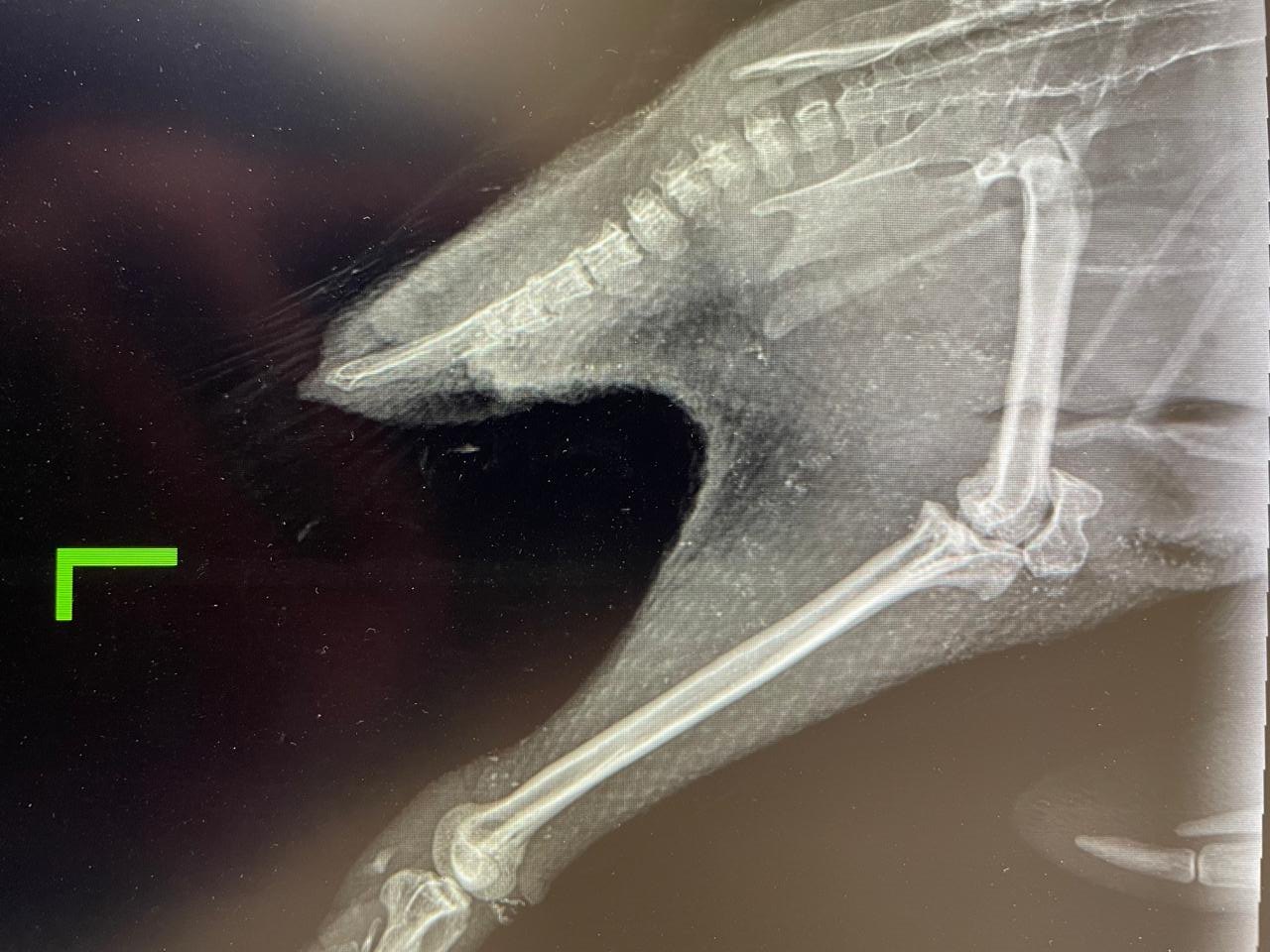
At the sanctuary the bird was examined by Dr. Annemarie Roberts, who took X-rays to work out how far the damage went. The wound was bad. The news was better than it looked: no broken bones. The penguin is responding to treatment and is still in the care of the rehabilitation team.
The second bird
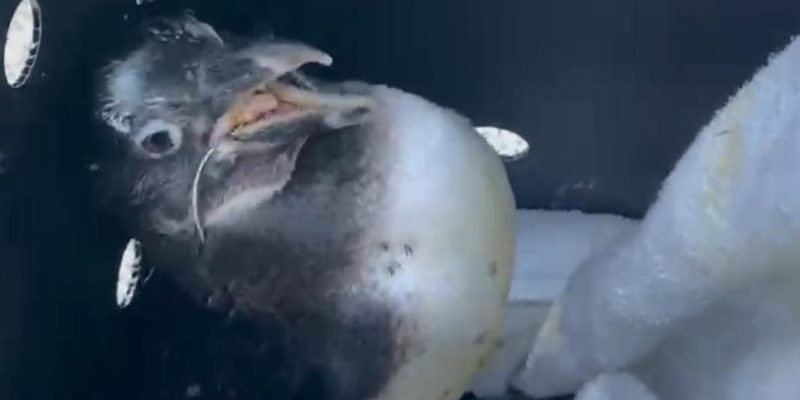
Four days later Niel got another call. This penguin was severely emaciated and had a hard plastic band jammed around its neck and through its mouth. It could not close its beak properly, which meant it could not feed, and it was in obvious pain.
The Falcks did not wait. They worked the plastic off themselves, and what they saw afterward told them how long it had been there: the beak could barely close even with the band gone. Niel gave the bird electrolytes to stabilize it while Xolani drove up from Gansbaai to collect it.
The update in the trust’s own account is the part worth keeping. The penguin’s mouth has started to close again, slightly. It is eating small pieces of fish. On the Sunday after it arrived, it had its first swim.
Why a volunteer 80 kilometers away matters
Seabird rescue runs on a first responder network, in the same sense the phrase is used for ambulances: someone close enough to reach the animal inside the window where reaching it still helps. A penguin with a plastic band through its mouth is starving on a clock. The sanctuary’s veterinary team and its X-ray room are in Gansbaai, and the South African coastline that the trust’s teams cover is far longer than any number of vehicles can patrol.
“We can’t do this on our own. The coastline is simply too vast for the Marine Dynamics and Dyer Island Conservation Trust teams to monitor alone. We rely on communities to be our eyes and ears, and we are incredibly grateful to people like Niel, Pamela and the Struisbaai community, who are always alert and willing to help marine animals in need,” said Wilfred Chivell, who founded the trust twenty years ago.
How threatened is the African penguin?
The IUCN Red List assesses the African penguin, Spheniscus demersus, as Critically Endangered globally, with a decreasing population. It is the only penguin that breeds on the African continent. The trust’s description of it as one of the world’s most threatened seabirds is accurate, which is not always the case with a conservation category in a press release, and it is worth recording when a facility gets it exactly right.
Who paid for this
ZooReviews traces the zoological funding behind conservation and rescue stories. For these two rescues, the trace comes back without a zoo on it.
The trust names two supporters in its own account of the rescues, and both are the right kind of specific. CFAO Mobility Toyota Cape Town sponsors the rescue and response vehicle, which is the vehicle that made the two late drives to Struisbaai. The KruShan Foundation paid for the KruShan Foundation X-Ray Room at the sanctuary, which is the room where the first bird’s radiographs were taken. Neither is a zoo or an aquarium.
The distinction is worth drawing carefully, because the same organization does take zoo money for something else. Accredited institutions in the United States, Denmark, South Africa and Britain sponsor the trust’s artificial penguin nest houses, and we reported the list when we covered the trust at the international penguin conference. That sponsorship buys nest houses. It did not buy the vehicle, the X-ray room or the rehabilitation of these two birds, so none of those institutions belongs on this story, and we have not put them on it.
What we could not confirm
Neither penguin is named in the trust’s account and neither has been mentioned in anything it has published since. We read its news feed forward from August 3 through September 8 and found no follow-up on either bird, so the most recent word on both of them is the one above: one responding to treatment, one eating and swimming. Rehabilitation for a bird that starved for weeks is measured in months, and the African Penguin and Seabird Sanctuary does not narrate every case to the end.
What the account does establish is the shape of the thing. A member of the public noticed. A retired rehabilitator picked up the phone. A senior rehabilitator drove two hours in the dark, twice in one week. A veterinarian took a picture of the inside of a penguin in a room somebody donated. That is what a critically endangered seabird’s second chance actually consists of.
Quick answers
- What happened to the two penguins?
Both were found at Struisbaai, South Africa, at the end of July 2026. One had a severe wound that looked like a bite; X-rays showed no broken bones. The other was emaciated with a hard plastic band jammed around its neck and through its mouth, which stopped it feeding.
- How are they now?
Both are at the African Penguin and Seabird Sanctuary in Gansbaai. The first is responding to treatment. The second has begun to close its mouth again, is eating small pieces of fish and had its first swim. The trust has published no update on either bird since August 3.
- Who rescued them?
Niel and Pamela Falck, volunteer rehabilitators at Struisbaai, reached both birds first and stabilized them. Xolani Lawu, senior bird rehabilitator at the sanctuary, drove roughly 80 kilometers each time to collect them. Dr. Annemarie Roberts examined the first bird.
- Do zoos fund this sanctuary?
Not this work. The trust credits CFAO Mobility Toyota Cape Town for the rescue and response vehicle and the KruShan Foundation for the sanctuary's X-ray room. Accredited zoos and aquariums do sponsor the trust's artificial penguin nest houses, which is a separate program.