The Oklahoma City Zoo and Botanical Garden has opened a student art exhibition inside its ZooZeum, and one of its four sections is built to be taken in through the nose. The Olfactory Art pieces are clay reliefs infused with organic materials, and guests are invited to lean in and smell them.
Radical Observations: Plants as Ecological Collaborators debuted on Monday, October 12, 2026. It gathers more than 35 original works made over the past year by students and faculty of the Weitzenhoffer Family College of Fine Arts School of Visual Arts at the University of Oklahoma.
What is in the exhibition
The works are grouped into four categories. Plant Biology collects original sketches and written summaries of the artists’ own encounters with native plants and landscapes in Oklahoma. Drawing the Natural World is scientific illustration of botanical life, observed both in local natural spaces and in curated collections and herbariums.
That second one carries a term worth keeping. A herbarium is a reference collection of pressed and dried plant specimens, each sheet a dated record of what was growing in a particular place, and it is how a botanist studies a plant that is not in front of them and not in season. An illustrator working from a herbarium is drawing from the same archive a scientist would use.
Expanded Animation is an interactive artwork produced by students working from research on carnivorous plants. And then the clay reliefs, which the zoo describes as imparting the experience of native botanicals to visitors in an all-new way.
Why a zoo is hanging botanical art
Because half of the institution’s name is the botanical garden, and this is the half that usually goes unmentioned. Plants are the part of a zoo that guests walk past on the way to the animals.
“This exhibit is another way for us to deliver on the Zoo’s mission to connect our guests with wildlife, which includes native plants, to inspire conservation action,” said Dr. Rebecca Snyder, chief missions programs officer at the Oklahoma City Zoo and Botanical Garden.
“These original works produced by students of OU School of Visual Arts celebrate the extraordinary beauty and diversity of Oklahoma’s botanic life while reflecting the artistic talent of our students,” said Haley Prestifilippo, a guest lecturer of drawing with the OU School of Visual Arts.
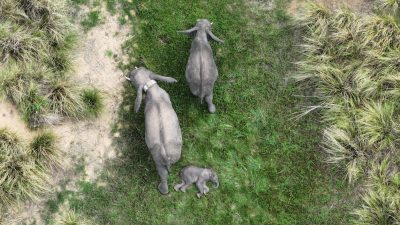
The zoo has turned up in our coverage before for its science, in a study of musth in Asian elephants.
Where it is, and what it costs
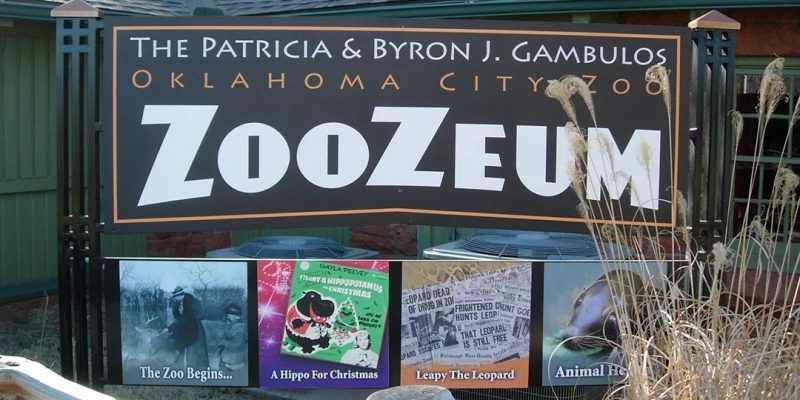
The exhibition is at the Patricia & Byron J. Gambulos ZooZeum, the zoo’s historical museum, which sits at Sanctuary Asia. The ZooZeum is open 9 a.m. to 4:30 p.m. daily and access to the exhibit is free with zoo admission. The zoo has not announced a closing date.
It is a short detour on a day you are already at the zoo, and it ends with being told to smell a sculpture, which is not an instruction most museums give.
Details and quotes come from the Oklahoma City Zoo’s October 22 announcement.
Quick answers
- What is Radical Observations at the OKC Zoo?
A University of Oklahoma student art exhibition, subtitled Plants as Ecological Collaborators, holding more than 35 original works about Oklahoma’s native plants and pollinators.
- When did the exhibition open?
It debuted on Monday, October 12, 2026. The zoo has not announced a closing date.
- Where is the ZooZeum?
The Patricia & Byron J. Gambulos ZooZeum is the zoo’s historical museum, located at Sanctuary Asia. It is open 9 a.m. to 4:30 p.m. daily.
- Does the exhibition cost extra?
No. Access is free with zoo admission.
- What is Olfactory Art?
One of the exhibition’s four categories: a series of clay relief sculptures infused with organic materials that guests are invited to smell.
- Who made the work?
Students and faculty of the Weitzenhoffer Family College of Fine Arts School of Visual Arts at the University of Oklahoma, over the past year.