
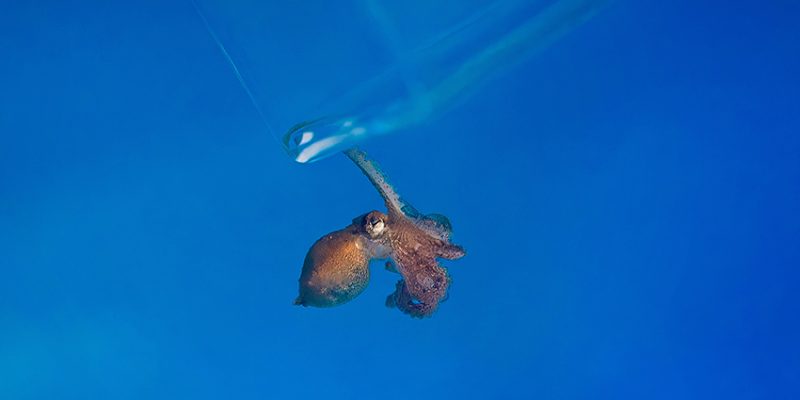
Two juvenile red octopuses have gone on public display at Birch Aquarium at Scripps in La Jolla, California, ten months after hatching from eggs no bigger than a grain of rice. They are among the first red octopuses ever raised successfully to the juvenile stage in aquarium care, and until now nobody had a clear idea of how long that takes.
“Turns out it takes about nine months for them to become juveniles,” said Maddy Tracewell, Senior Aquarist of Animal Health.
Where to find them
The pair are in one of the small nursery habitats in the Coastal California section of the Adam R. Scripps Living Seas Gallery. A divider splits the habitat into two spaces, so the octopuses grow up side by side while staying safely apart.
They are two of six from the hatch that reached the juvenile stage. In the wild, only about one percent of octopuses survive to adulthood, which is the number that puts this work in perspective.
Watching an octopus become an octopus
The octopuses hatched last October and began life as paralarvae, tiny and free-swimming, before settling down to the seafloor. What followed was a rebuild.
Their camouflage grew steadily more capable. Their eyes developed the distinctive horizontal pupils of the species. Their bodies turned more opaque as leucophores, the light-reflecting cells that produce white coloration, filled in. Along their heads and bodies, skin papillae became more defined, giving them finer control over texture so they could match whatever they were sitting on.
“Watching them grow over the last 10 months has been such an incredible experience, and I’ve gained such a newfound appreciation and respect for Red Octopuses,” Tracewell said. “Being able to finally share them with our guests and move two on display is such an exciting milestone.”
The part that had no instruction manual
Tracewell held the octopuses back from display until they had completed settlement metamorphosis and reached the juvenile stage. The complication is that no one had ever raised this species from hatching to juvenile in aquarium care, so there was no published timeline to check against. The team had to recognize the milestone as it happened.
She took what the team learned to the 2026 Regional Aquatics Workshop, presenting findings on rearing red octopus paralarvae through settlement. The presentation won Best of RAW: Best First-Time Presenter. The RAW Board of Directors and Programming Committee called it “a prime example of the type of information that we want to share with our colleagues at every RAW conference.”
“The last few months have been such a remarkable journey, and I’m excited to continue sharing what I’ve learned with aquarium colleagues and scientists around the world to help advance the care and understanding of this remarkable species,” Tracewell said.
Why it is worth the trip
Red octopuses are a local species along this coast, which means the animals in the nursery habitat are neighbors. Stand at the glass long enough and you will see the camouflage work in real time: color shifting, skin texture rising and flattening, a small animal deciding what to look like. Both octopuses are on view now at Birch Aquarium, and they will not stay small for long.